

Published September 17, 2026
For practitioners gazing across a serene studio, watching an experienced yoga teacher seamlessly mirror their movements can feel akin to witnessing a subtle superpower. As the instructor calls out instructions to lift a left arm while gracefully raising their right, students effortlessly follow along without missing a beat.
Yet, beneath the tranquil surface of a studio class lies a notoriously demanding cognitive hurdle. For both greenhorn instructors and seasoned veterans alike, the art of mirroring—practicing movements on the opposite side of the room from the students facing them—remains one of the most daunting challenges in the pedagogical toolkit.
How, exactly, does one instruct a roomful of students to move their left side while physically executing the right without descending into a tangle of confusion? According to top-tier educators and somatic experts, mastering this skill requires patience, intentional strategies, and a willingness to embrace initial awkwardness.
Main Facts: The Anatomy of Yoga Mirroring
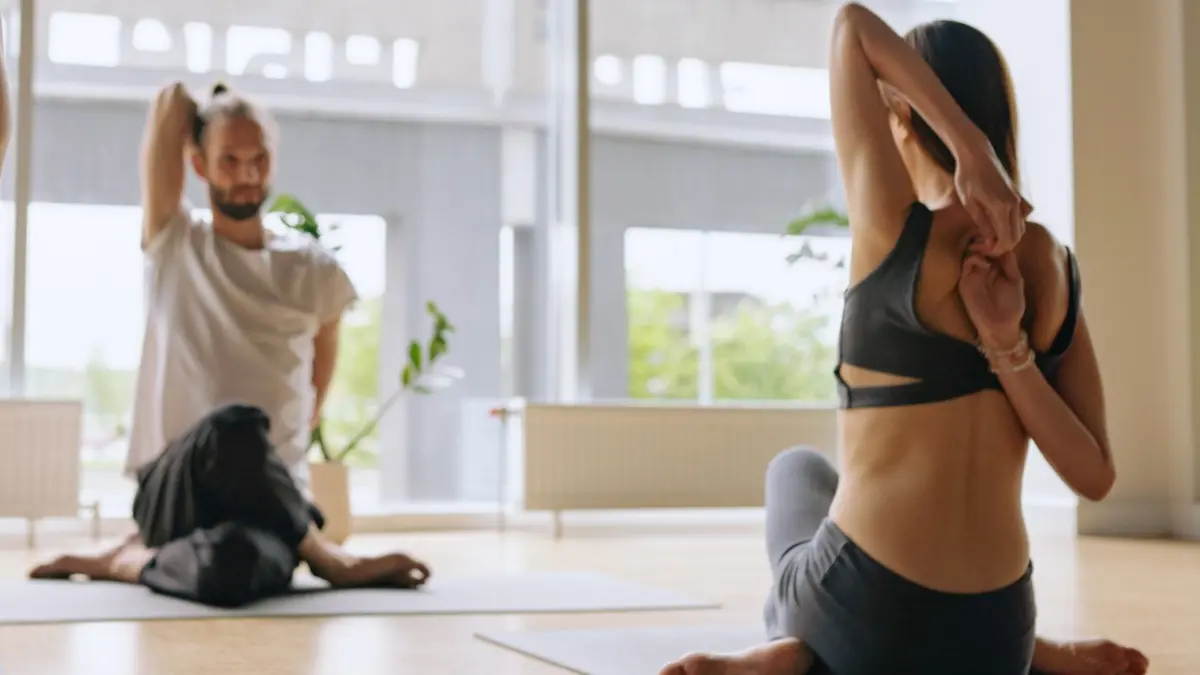
At its core, mirroring is an instructional technique where a teacher faces their students and performs movements using the inverse side of the body. If the instructor wants the class to step forward on their right foot, the instructor steps forward on their left.
While it often feels entirely disorienting for the person leading the class, the practice is fundamentally designed for the benefit of the student.
"Mirroring is one of the hardest things to master," says Brett Larkin, a veteran yoga instructor and founder of Uplifted Yoga. "It can feel disorienting, especially at first. And chances are you will confront confusion, doubt, and more than a few mistakes while learning to hone this teaching style."
Despite the friction it causes instructors, experts emphasize that mirroring is an act of deep consideration. It bridges the gap between the teacher’s body and the student’s visual perception.
"If I lift my left arm to cue students to lift their right, they can simply match what they see, the way you’d follow someone across from you in a dance," explains Nam Chanterrwyn, a teacher trainer with the American Yoga Council and YogaNam. By eliminating the need for students to mentally flip instructions across a spatial axis, teachers remove unnecessary friction, allowing practitioners to remain deeply connected to their breath, body, and inner experience.
Chronology and Evolution of Instructor Training
The struggle with left-right translation is as old as modern postural yoga itself. Historically, early Western yoga instruction relied heavily on verbal-only cues or instructors practicing facing the same direction as the class—a method that severely limited eye contact and community connection.
As group fitness evolved to prioritize visual synchronicity, the expectation for instructors to face their classes and mirror movements became standard practice in major teacher training institutions, such as YogaWorks and various somatic academies.
Over the decades, instructor training has slowly adapted to acknowledge the cognitive load of mirroring. Where early training programs often expected teachers to "sink or swim" with directional cues, modern curriculums increasingly treat mirroring as a progressive motor skill. Just as a musician practices scales before attempting a concerto, contemporary yoga pedagogy now encourages instructors to isolate mirroring as a distinct, trainable competency built through deliberate repetition over months—and sometimes years—of classroom experience.
Supporting Data and Industry Insights
The mental gymnastics required to mirror are heavily documented in peer communities and pedagogical research. A viral discussion on Reddit’s r/YogaTeachers community—titled “Why Is Mirroring So Hard?”—garnered hundreds of responses from instructors detailing the exact neurological fatigue associated with teaching facing classes.
Neuroscientists and movement specialists note that mirroring forces the brain to override its natural proprioceptive feedback loop. When you move your right hand, your brain expects visual confirmation of your right hand. Mirroring forces the brain to process a contradictory visual input, explaining why even experienced educators occasionally stumble.
According to prominent teacher trainer and author Amy Ippoliti, shifting perspective can alleviate this fatigue. Ippoliti suggests that instead of translating your own limbs, instructors should view the students’ bodies as the primary reference point. By looking at a student’s left side and speaking directly to it, the instructor effectively allows the room to act as their mirror, transforming a rigid performance into a collaborative dialogue.
Official Responses and Expert Strategies
To help instructors navigate this challenging landscape, master teachers have developed a series of reliable techniques designed to build muscle memory and reduce in-class errors.
1. Start Small and Isolate the Skill
Chanterrwyn recommends stepping away from live classes entirely when first tackling the technique. "Practice simply raising your left arm while saying out loud that you are lifting your right arm, and vice versa," he advises. Using a household mirror during this practice helps bridge the visual gap so instructors can see precisely what their future students will experience. Once isolated, teachers can scale up from a single movement to a full pose, and eventually to a short sequence.
2. Leverage Physical Anchors and "Tricks"
Many instructors rely on subtle tactile or visual markers to keep their directions straight. Common hacks include:
- Drawing a small "R" or "L" discreetly on the corresponding hand.
- Marking the front corners of the yoga mat with directional letters.
- Wearing a distinct piece of jewelry—such as a watch, ring, or bracelet—on one specific wrist. "If you wear a bracelet on your left wrist, then when you cue your students’ right arm, you know you’re moving your bracelet arm," Larkin notes.
3. Mind Your Position in the Room
Mirroring is most effective when students have an unobstructed view of the instructor. However, teachers should not feel chained to the front of the room. Moving to the side of the studio during postures like Extended Side Angle can make alignment clearer, though instructors must remain flexible enough to drop mirroring when they change vantage points.
4. Ditch Left and Right in Favor of Environmental Cues
When spatial confusion peaks, many instructors abandon traditional left-right terminology altogether. By utilizing the architecture of the studio—such as instructing students to "reach toward the windows" instead of "reaching to the right"—teachers can bypass directional errors entirely. Similarly, utilizing terms like "front foot," "back leg," "top arm," and "bottom arm" keeps classes flowing smoothly.
Implications: When Mirroring Doesn’t Work
Despite its widespread use, experts caution that mirroring is not a universal panacea. There are notable instances where the technique can actively hinder a class.
For reclining postures, restorative classes, or settings where students’ mats are arranged in a circle, mirroring becomes entirely redundant or physically impossible. Furthermore, in studios equipped with large mirrored walls at the front of the room, instructor-led mirroring can scramble a student’s brain, as reflections create conflicting visual data.
For neurodivergent practitioners and teachers alike, the cognitive toll of mirroring can be exceptionally high. Dr. Kirstie MacDonald Scott, a neurodivergent yoga teacher, somatic expert, and author of the forthcoming book Somatic Touch: An Integrative Approach to Physical and Psychosomatic Trauma, intentionally avoids mirroring in her classes.
"I remember taking a class [in which] the teacher was mirroring, [and] struggling to figure out if I was supposed to twist right or left. It scrambled my brain," says Scott. Instead, she utilizes fluid, somatic language, inviting students to choose a side freely by stating, "Lift one arm," followed later by, "Switch sides."
Other instructors, like Malaika DosRemedios, simply turn their backs to the class when spatial clarity is paramount. Rather than forcing a flawed mirror, DosRemedios will transparently announce: "I’m turning my back to you for a few moments just so we can get our lefts and rights as clear as possible as we go into the next series."
Conclusion: To Mirror or Not?
Ultimately, yoga teaching is an art form defined by connection, safety, and clarity—not dogmatic adherence to a single technique. Mirroring is a valuable tool, but it is not a mandatory requirement for a successful teaching career.
For instructors determined to master the skill, the path forward is paved with self-compassion. As Nam Chanterrwyn reminds educators navigating the awkward learning curve: "Every teacher who mirrors smoothly today once struggled to work it out in real time. Eventually the calculation stops being conscious. Just try to mirror one pose more cleanly than you did the class before."
