

Main Facts
The contemporary art world is undergoing a profound and long-overdue metamorphosis, driven largely by the relentless creativity, strategic vision, and technical mastery of women artists. In its latest annual special advertising and editorial showcase, Southwest Art has unveiled a curated window into this vibrant movement, spotlighting a diverse cohort of creators who are shaping the cultural discourse of the twenty-first century.
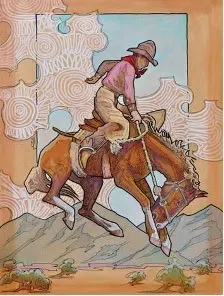
At the center of this year’s feature is a striking representation of modern talent, exemplified by works such as Maia Chavez Larkin’s Heartbreaker—a compelling synthesis of oil and ink on canvas measuring 24 by 18 inches. Larkin’s piece serves as a visual anchor for a broader narrative: women artists are no longer merely participating in the fine art market; they are actively expanding its boundaries.
Hailing from every corner of the United States, the artists featured in this year’s section represent a cross-section of mediums, styles, and philosophies. They are securing coveted spots in elite commercial galleries, mounting critically acclaimed solo exhibitions, entering permanent museum collections, and building enduring artistic legacies. Despite historical systemic barriers that have marginalized women in the fine arts, today’s practitioners are leveraging their unique perspectives to challenge conventions, engage deeply with contemporary issues, and redefine what it means to succeed in the art market.
Chronology: A Historical and Modern Perspective on Women in Art
To understand the weight and significance of contemporary showcases celebrating women artists, it is essential to trace the historical trajectory of women’s involvement in the fine arts—a timeline marked by exclusion, quiet persistence, and eventual institutional reckoning.
The Era of Exclusion (Pre-20th Century)
For centuries, formal art academies across Europe and the Americas barred women from studying the human figure from life—the foundational training required for history painting, which was considered the highest form of art. Despite these restrictions, pioneering women such as Artemisia Gentileschi in the 17th century and Élisabeth Vigée Le Brun in the 18th century achieved remarkable success by carving out niches in portraiture and patron-based commissions. However, their achievements were often treated as historical exceptions rather than proof of systemic capability.
The Modernist Breakthrough and Mid-Century Struggles (Early to Mid-20th Century)
The early 1900s brought avant-garde movements that temporarily destabilized traditional hierarchies. Artists like Georgia O’Keeffe in the United States and Frida Kahlo in Mexico forged deeply personal, iconic styles that resonated internationally. Yet, even as abstract expressionism dominated the mid-century market, women like Lee Krasner and Elaine de Kooning frequently found their contributions overshadowed by their male peers, often viewed through the lens of their relationships rather than their independent genius.
The Feminist Art Movement and Institutional Critique (1960s–1980s)
The socio-political upheavals of the 1960s and 1970s catalyzed the Feminist Art Movement. Pioneers like Judy Chicago, Miriam Schapiro, and the Guerrilla Girls brought institutional sexism to the forefront of cultural consciousness. Through radical installations like The Dinner Party and provocative public statistics regarding gender representation in museums, these artists forced cultural institutions to begin evaluating their acquisition policies.
The Digital Era and Market Parity (1990s–Present)
Entering the late 20th and early 21st centuries, the art world witnessed a gradual decentralization of power. The rise of independent galleries, digital archiving, and global art fairs allowed women artists to bypass traditional gatekeepers. Today, contemporary platforms—such as specialized editorial showcases, artist-run spaces, and targeted gallery exhibitions—provide the visibility necessary to translate critical acclaim into lasting market value. The modern era is characterized not just by inclusion, but by leadership, as women routinely command top-tier gallery representation and major institutional retrospectives.
Supporting Data: The State of Women in the Fine Arts Market
While cultural visibility has increased exponentially, quantitative data reveals a nuanced picture of the fine arts economy, illustrating both substantial progress and persistent disparities that artists, gallerists, and researchers continue to navigate.
Representation in Permanent Collections
According to a landmark multi-year study conducted by a consortium of art historians and data scientists examining major U.S. art museums:
- Historical Imbalance: Historically, works by women have accounted for less than 15% of permanent collections in major American institutions.
- Recent Acquisitions: Between 2008 and 2020, acquisitions of work by women artists in major museums rose from roughly 10% to over 25%, indicating a concerted institutional pivot toward corrective collection strategies.
Gallery Representation and Primary Market Pricing
Data compiled from major art market analytics firms indicates shifts in commercial viability:
- Mid-Tier Parity: In regional and mid-tier commercial galleries across the United States, women now represent nearly 50% of featured roster artists, frequently matching or exceeding male counterparts in solo-show frequency.
- The Secondary Market Gap: While primary market prices for emerging and mid-career women artists have surged, a noticeable valuation gap remains at the ultra-high end of the secondary auction market, where historical works by male blue-chip masters continue to dominate record-breaking sales. Nonetheless, contemporary women artists are increasingly setting personal auction records, signaling a long-term recalibration of value.
Diversity of Medium and Geography
The geographic distribution of today’s successful women artists has also decentralized. While cultural hubs like New York and Los Angeles remain influential, robust artistic communities have flourished across the American Southwest, the Pacific Northwest, and the Southeast. Furthermore, contemporary women artists are actively bridging traditional disciplines—blending oil, ink, sculpture, digital media, and mixed-media installations to appeal to a sophisticated, modern collector base.
Official Responses and Industry Perspectives
Leaders across the fine art ecosystem—including gallerists, curators, and the artists themselves—have offered profound insights into the shifting paradigms of contemporary art and the vital importance of dedicated showcases.
Curatorial and Gallerist Perspectives
Director of a prominent national contemporary gallery, Elena Rostova, emphasized the evolving criteria of art acquisition among modern collectors:
"Today’s collectors are looking for authenticity, narrative depth, and technical excellence. They aren’t buying based on outdated historical biases anymore. When we mount solo shows featuring women artists who push the boundaries of their respective mediums, the response is overwhelmingly enthusiastic. Platforms that spotlight these creators play a crucial role in bridging the gap between studio innovation and public awareness."
Art historian and museum curator Dr. Marcus Vance noted the structural evolution within institutions:
"The mandate of the modern museum is to reflect the complete human experience. For decades, the narrative of American art was told through a narrow lens. By actively rewriting our exhibition calendars and acquisition mandates to center women artists, we are not just correcting a historical oversight; we are vastly enriching the cultural canon for future generations."
Artist Perspectives
Reflecting on the realities of navigating the contemporary market, artists participating in national showcases point to community, resilience, and uncompromised vision as the keys to longevity.
Maia Chavez Larkin, whose mixed-media work Heartbreaker fuses the fluidity of ink with the structural weight of oil paint, shared her perspective on her creative process and market presence:
"As an artist, your primary responsibility is to remain honest to your internal vision. The materials we choose—whether it’s the tension between ink and oil or the narrative we build on canvas—are conduits for human emotion. Knowing that there is a growing, supportive ecosystem of collectors, curators, and publications championing women artists gives us the freedom to take bold risks in our work. We aren’t just making art for the moment; we are building legacies that will outlast us."
Another featured creator, sculptor and installation artist Naomi Brooks, highlighted the changing dynamics of gallery representation:
"The infrastructure of the art world is shifting. Twenty years ago, breaking into elite gallery circles felt like scaling an impassable wall. Today, through targeted digital platforms, artist collectives, and specialized print features, we have more agency than ever to tell our own stories and connect directly with audiences who resonate with our work."
Implications: The Future of the Art Market and Cultural Legacy
The sustained momentum of women artists carries profound implications for the global art market, cultural institutions, and the next generation of creative practitioners.
Economic Revaluation and Market Stability
As collectors, investors, and institutions increasingly recognize the historical undervaluation of art by women, a significant economic correction is underway. This revaluation provides greater market stability and opens up new investment categories within the fine arts sector. Emerging and mid-career women artists are enjoying stronger primary market sales, which in turn fuels further experimentation and ambition within their studio practices.
Rewriting the Educational and Cultural Canon
The visibility generated by dedicated special sections, museum retrospectives, and academic studies directly influences art education. Young artists entering universities and community art programs today see themselves reflected in the highest tiers of the profession. This representation dismantles lingering impostor syndrome and encourages a diverse new generation to pursue rigorous training, elite gallery representation, and ambitious public commissions.
A More Inclusive Global Dialogue
Ultimately, the ascendance of women in the contemporary art world transcends economics and representation—it fundamentally expands the emotional and intellectual scope of culture. By bringing diverse lived experiences, intersectional perspectives, and innovative technical fusions to the forefront of galleries and museums, women artists are redefining the visual language of our time.
As annual showcases like Southwest Art’s Women in Art feature continue to introduce audiences to the creative minds driving today’s market, they serve as both a celebration of current triumphs and a roadmap for the future. In the hands of these visionary creators, the art world is becoming more inclusive, dynamic, and reflective of the diverse society it serves.
