

By Rod Meade Sperry
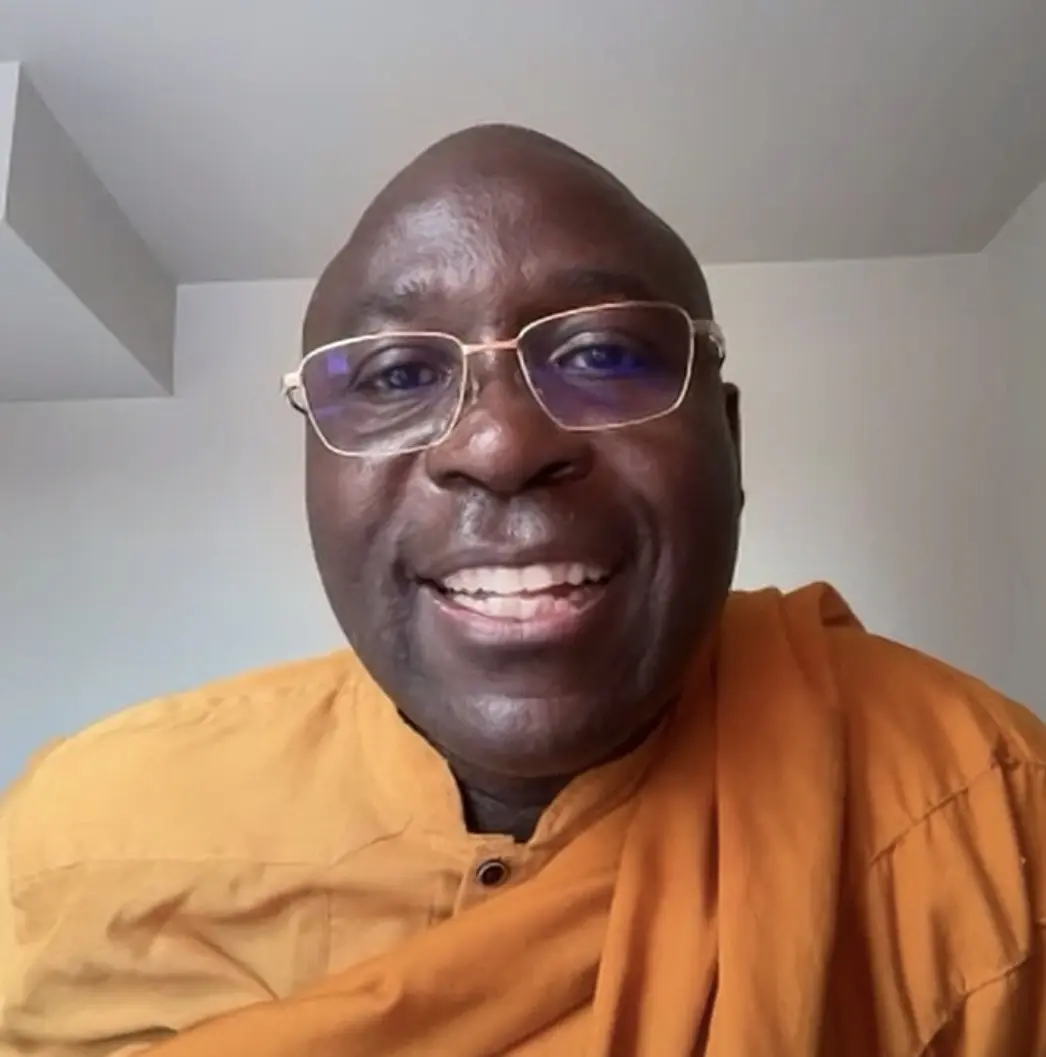
As the Uganda Buddhist Centre (UBC) marks its monumental 20th-anniversary milestone this year, an international coalition of Buddhist teachers, practitioners, and supporters has mobilized for a critical mission. They are racing against time to help the center secure a 13-acre parcel of vital wetland. This land acquisition is not merely an expansion of property; organizers describe it as a pivotal moment that will determine the future of Buddhism in East Africa while safeguarding a fragile, irreplaceable ecosystem on the shores of Lake Victoria.
Because of monastic vows and traditional codes of conduct, UBC’s founder and abbot, Bhante Buddharakkhita, does not solicit funds himself. Instead, a dedicated grassroots network of friends and senior Dharma teachers deeply moved by his vision and the center’s profound community impact has stepped forward. They have organized globally on the community’s behalf, launching a high-stakes fundraising campaign with demanding financial deadlines.
Main Facts: The Land, the Threat, and the Mission
At the heart of the campaign is an unprecedented opportunity: UBC can acquire 13 acres of pristine wetland situated directly adjacent to its existing campus in Bulega-Garuga, near Entebbe. The tract sits on the shores of Lake Nalubaale (internationally known as Lake Victoria)—the legendary source of the Nile River.
Securing this land serves a dual purpose. First, it will allow UBC to construct what organizers believe will be the very first retreat center on the African continent built exclusively for the deep study, practice, and sharing of the dhamma. Second, and equally urgent, ownership by the Buddhist center will permanently protect the fragile wetland from encroaching industrial and commercial development.
The alternative to community acquisition is stark. According to campaign organizers, if the land is not secured by UBC, it faces imminent sale for high-impact commercial use, such as a resort development, or government requisition for a military installation. Environmental and community advocates warn that either outcome would introduce devastating noise, artificial light, and waste pollution directly into the ecosystem. This industrial encroachment would directly threaten the food and water security of local schools, a nearby orphanage, and the surrounding villages that rely on the wetland for their daily survival.
The financial hurdle is substantial. The total asking price for the 13 acres is $1.75 million, with overall campaign targets set at $2 million to cover necessary foundational expenses. As of this writing, a remarkable $781,888 has been raised, an amount that includes $760,000 in generous pledges from anonymous donors inspired by the project’s vision.
However, the timeline is fiercely tight. Organizers state that half of the total funds must be secured as a binding deposit by September 15. The remaining $875,000—plus associated legal fees, transfer taxes, and closing costs—is due in full by November 15.
Chronology: From Catholic Childhood to African Dharma
To understand the weight of this moment, one must trace the extraordinary journey of Bhante Buddharakkhita, a path defined by cross-cultural exploration, spiritual awakening, and physical peril.
Early Life and Spiritual Awakening (1966–1990)
Born Steven Kaboggoza in Uganda to a devout Roman Catholic family, Bhante Buddharakkhita grew up navigating the rich cultural landscapes of East Africa. In 1990, while traveling to India to pursue higher studies in business, his life changed course. Living in a student hostel, he befriended two Thai Buddhist monks. Their mindful demeanor, gentle presence, and profound philosophical insights planted the initial seeds of curiosity about the Buddha’s teachings.
His exploration deepened significantly years later when he had his first personal audience with the 14th Dalai Lama. Reflecting on that encounter, Bhante Buddharakkhita often tells supporters a simple, defining realization: "I’m hooked now."
Ordination and Rigorous Training in the West (2002–2005)
After years of dedicated study and meditation practice, he took monastic vows in 2002, receiving full ordination from the esteemed prelate Sayadaw U Silananda at the Tathagata Meditation Center in San Jose, California. This milestone made him one of the very first native African Buddhist monks in modern history.
Seeking a deep foundation in meditation and scriptural mastery, he spent the next eight years training intensively under the guidance of Bhante Henepola Gunaratana—author of the internationally acclaimed bestseller Mindfulness in Plain English—at the Bhavana Society monastery in West Virginia. This rigorous monastic training prepared him for the unique challenges of introducing an ancient Asian spiritual tradition to his home continent.
Returning Home and Facing Peril (2005)
In 2005, Bhante Buddharakkhita returned to Uganda with a singular vision: to plant the roots of the Dharma in African soil. Establishing the Uganda Buddhist Centre in Bulega-Garuga was an act of profound courage.
His path back home was not without physical danger. In the early years, the sight of a Black African monk clad in traditional Theravada robes startled and confused local communities unfamiliar with Buddhism. Misunderstandings bred suspicion, and Bhante Buddharakkhita faced direct hostility, including an incident where he was shot at, narrowly escaping a bullet. Rather than retreating, this trial tempered his resolve and deepened his empathy, shaping an inclusive approach to teaching that he terms "Afro-Dhamma"—a harmonious synthesis of core Buddhist practice, African communal values, and holistic healing.
Two Decades of Growth (2005–2025)
Over the past two decades, UBC has evolved far beyond its humble origins as a solitary meditation space. It has transformed into a thriving multi-faceted community hub. The campus now encompasses the Buddhist Peace School (serving pre-school and primary students) and the African Buddhist High School. Furthermore, the center has expanded its physical infrastructure to provide vital community services, including clean water systems and basic medical outreach for surrounding villages that lack adequate government infrastructure.
Supporting Data: The Financial Landscape of the Campaign
The campaign to purchase the 13-acre wetland is operating under an aggressive financial schedule designed to satisfy private sellers and secure legal ownership before competing commercial interests can finalize contracts.
| Financial Metric | Amount (USD) | Notes & Status |
|---|---|---|
| Total Asking Price (Land) | $1,750,000 | Direct cost to acquire the 13-acre wetland parcel. |
| Overall Campaign Goal | $2,000,000 | Includes land acquisition, legal fees, taxes, and initial infrastructure. |
| Current Funds Raised | $781,888 | Total raised to date through community and major gifts. |
| Anonymous Pledges Included | $760,000 | Generous matching and direct pledges from anonymous benefactors. |
| Phase 1 Deposit Deadline | 50% of Total | September 15 deadline required to lock down the property agreement. |
| Phase 2 Final Payment | $875,000 + Fees | November 15 deadline for the remaining balance, taxes, and legal closing costs. |
Organizers emphasize that the campaign relies on contributions from the global Dharma community at every level—what they term a "stretch gift." Whether an individual donor contributes $100 or $100,000, every financial contribution directly impacts the center’s ability to meet its looming autumn deadlines. For donors wishing to give through donor-advised funds (DAFs), cryptocurrency, or wire/ACH transfers, campaign organizers have established direct communication channels via the official GoFundMe campaign page.
Official Responses and Perspectives
The campaign has garnered vocal support from senior international Buddhist leaders, interfaith figures, and environmental advocates who recognize the global significance of establishing a permanent sanctuary for the Dharma in East Africa.
In a series of recent video briefings and updates released to the international community, Bhante Buddharakkhita articulated the spiritual imperative of the center’s expansion:
"The Dharma is not restricted by culture, geography, or history. It belongs to all living beings. For twenty years, we have seen how mindfulness, compassion, and wisdom can heal deep community wounds in Uganda. This new land is not merely dirt and water; it is a sanctuary for future generations to quiet their minds, connect with nature, and discover inner peace without the noise of modern distraction."
Senior teachers coordinating the international fundraising effort have echoed these sentiments, highlighting the intersection of ecological stewardship and spiritual practice. In a joint statement, the organizing committee noted:
"We are standing at a historic crossroads. If we fail to act by November, this fragile wetland—the literal cradle of the Nile—could be paved over for commercial resorts or military installments, poisoning the water that local schools and orphanages depend on. By stepping up today, the global Buddhist community has a rare opportunity to practice radical generosity: protecting an endangered ecosystem while laying the permanent foundation for the first dedicated retreat center on the African continent."
Environmental scientists and local community leaders in Entebbe have also voiced grave concerns regarding the alternative outcomes for the 13 acres. Local village elders pointed out that the wetlands function as a natural filtration system for Lake Victoria. Industrial development would permanently degrade water quality, threatening regional public health and agricultural yields.
Implications: A New Chapter for African Buddhism
As the Uganda Buddhist Centre crosses its 20-year threshold, the success or failure of this land acquisition campaign carries profound implications for the future of Buddhism globally and across Africa specifically.
1. Establishing a Continental Hub for the Dharma
While Buddhist centers have existed in South Africa and sporadic pockets across the continent for decades, the establishment of a dedicated, purpose-built retreat center in East Africa fills a major geographic and spiritual void. It provides a permanent institutional home where practitioners from across Africa and around the globe can immerse themselves in long-term meditation retreats, monastic training, and interfaith dialogue, all grounded in the unique synthesis of "Afro-Dhamma."
2. A Blueprint for Eco-Buddhism in Action
The campaign bridges the often-separate worlds of contemplative practice and environmental activism. By directly purchasing and protecting a vital wetland on the shores of Lake Victoria, UBC demonstrates how religious institutions can actively embody the First Precept (refraining from harming life) by defending natural habitats from destructive overdevelopment. If successful, the initiative will serve as a global model for eco-dharma stewardship.
3. Securing Long-Term Community Resilience
Beyond its spiritual and ecological dimensions, the expansion secures the physical well-being of the surrounding community. By blocking industrial projects that threaten local water and food security, UBC reaffirms its two-decade commitment to being a pillar of social welfare, education, and health services in Bulega-Garuga.
As the September 15 deposit deadline approaches, the global Buddhist community faces a defining test of solidarity. The outcome will decide whether the next chapter of Buddhism in Africa flourishes in a protected sanctuary of quietude and conservation, or whether the shores of the Nile succumb to the pressures of modern industrial expansion.
To learn more about the campaign, watch video updates from Bhante Buddharakkhita, or contribute to the land acquisition fund, visit the official Uganda Buddhist Centre GoFundMe Campaign.
