

By James Gritz (Enriched & Expanded Report)
Main Facts
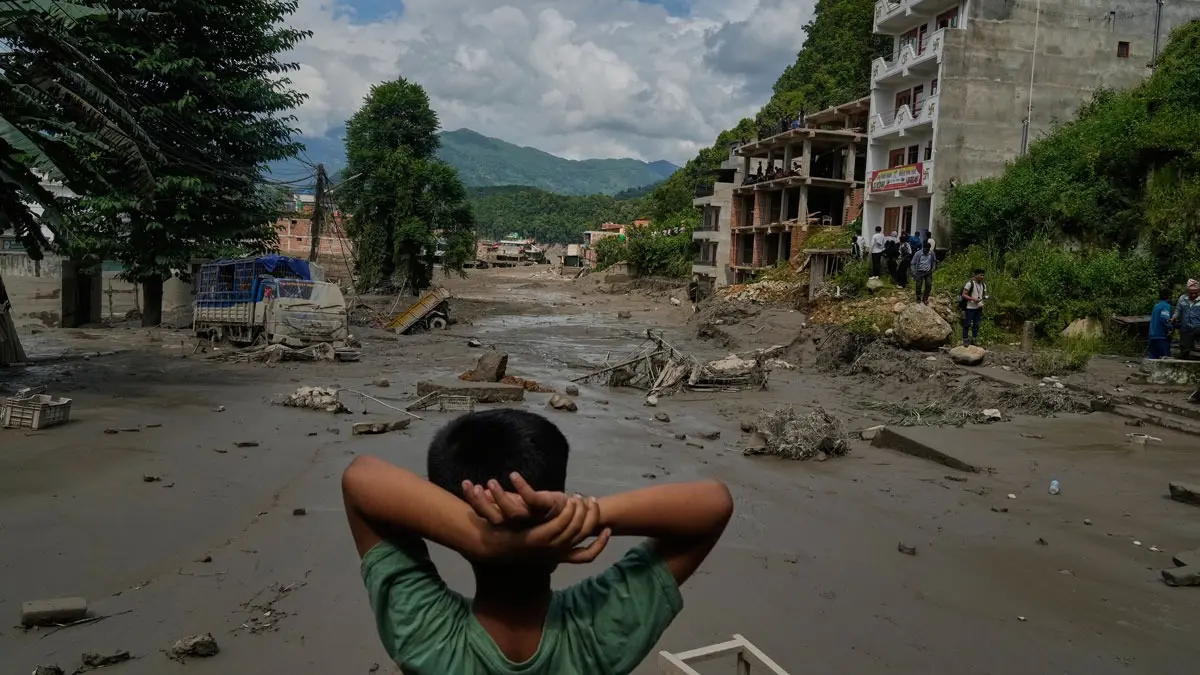
On the morning of August 26, a catastrophic environmental disaster struck the roof of the world. A massive glacier gave way high above Kyirong on the Tibetan side of the Himalayan border, precipitating a catastrophic cascade of water, ice, and heavy debris. The violent torrent tore rapidly down through the rugged terrains of Rasuwa and Nuwakot in Nepal, obliterating entire mountain villages, historic bridges, and vital hydroelectric power stations in its path. Surging relentlessly down the Bhote Koshi and into the Trishuli river systems, the wall of water caught communities entirely unawares, triggering what local authorities have designated one of the worst climate-related disasters in the region’s recent history.
According to the latest figures released by Nepal’s National Disaster Risk Reduction and Management Authority (NDRRMA), the human toll is staggering. More than 350 people have been officially confirmed dead within Nepal, while over 800 individuals remain unaccounted for. Across the border in Tibet, at least three fatalities have been reported, with hundreds more missing. Among the missing are a significant number of religious pilgrims journeying toward Mount Kailash and Lake Mansarovar—sacred grounds revered deeply by Hindus, Buddhists, Jains, and Bönpo adherents alike.
For those who have spent decades studying, practicing, and living within the spiritual landscape of the Himalayas, the names Rasuwa and Nuwakot are far more than coordinates on a map. They represent the living heartland of Tibetan Buddhism in exile, regions deeply interconnected with sacred traditions, monastic communities, and lineages that have sustained practitioners for generations. The sudden erasure of these landscapes and the lives of those who inhabited or traversed them has sent shockwaves through spiritual and humanitarian communities worldwide.
Chronology of the Disaster
Pre-Dawn Instability: The Collapse Above Kyirong
While precise meteorological data leading up to the exact minute of the collapse is still being analyzed by glaciologists, regional monitoring indicates that mounting thermal stress and unprecedented melting patterns destabilized the high-altitude glacier above Kyirong. In the early morning hours of August 26, structural integrity failed entirely, causing millions of metric tons of ice, rock, and trapped glacial meltwater to break free.
The Torrent Unleashed: Rasuwa and Nuwakot Impact
Within hours, the colossal surge crossed the international boundary, racing southward along steep river valleys. The sheer volume of the flash flood overwhelmed natural barriers, transforming placid mountain streams into raging walls of debris. Rasuwa district bore the immediate brunt of the impact as the torrent swept away rural settlements, leveled multi-story homes, and sheared concrete and steel bridges off their foundations. Moving with terrifying velocity, the floodwaters continued their descent into Nuwakot, demolishing vital infrastructure, including key hydropower installations that supply electricity to wide swathes of the region.
Cascading Downstream: Bhote Koshi and the Trishuli
As the debris flow merged with the Bhote Koshi and subsequently emptied into the Trishuli River, the threat expanded downstream. Flood warnings blared across vulnerable riverbank communities, prompting frantic evacuations. However, because the torrent traveled at breakneck speed through narrow gorges, early warning systems proved insufficient for many remote hamlets. Search and rescue (SAR) operations were launched almost immediately, though responders quickly found themselves hindered by impassable roads, severed communications lines, and unstable terrain.
Supporting Data and Humanitarian Metrics
Casualty and Missing Persons Breakdown
- Confirmed Deaths (Nepal): 350+
- Missing Persons (Nepal): 800+
- Confirmed Deaths (Tibet/China): 3
- Missing Persons (Tibet/China): Hundreds unaccounted for, including domestic and international pilgrims.
Infrastructure Devastation
- Villages Destroyed: Multiple remote settlements completely or partially swept away in the Rasuwa and Nuwakot corridors.
- Transportation Links: Dozens of vital bridges and access roads destroyed, isolating survivors and cutting off emergency supply lines.
- Energy Sector: Critical hydropower stations heavily damaged, leading to regional power outages and complicating rescue efforts.
Verified Humanitarian Relief Channels
In the wake of such widespread devastation, international and local organizations have mobilized to provide emergency medical care, search-and-rescue support, and temporary shelter. Authorities and relief organizations strongly advise donors to contribute exclusively through verified, established institutions rather than unvetted social media fundraisers, which are frequently exploited by opportunistic scammers in post-disaster environments.
-
Nepal Red Cross Society
Operating in coordination with the International Federation of Red Cross and Red Crescent Societies (IFRC), which has already released emergency disaster relief funds to jumpstart boots-on-the-ground operations.
Website: ifrc.org -
GlobalGiving’s Nepal Flood Relief Fund
Channels financial resources directly to trusted local non-governmental organizations specializing in rapid search and rescue, emergency healthcare provision, and temporary housing.
Website: globalgiving.org -
Direct Relief
A longstanding medical aid organization supporting Nepal’s healthcare infrastructure since 2009, currently coordinating pharmaceutical and medical supply drops directly with Nepal’s Ministry of Health.
Website: directrelief.org
Official Responses and Spiritual Reflections
The tragedy has prompted an outpouring of grief, solidarity, and solemn reflection from global spiritual leaders, who have offered prayers for the victims and pointed toward the broader ecological context of the disaster.
Statement from His Holiness the Dalai Lama
In an official condolence message released on Thursday, August 28, the Dalai Lama expressed profound sorrow over the catastrophe:
"I am saddened to learn of the devastating floods in the Rasuwa region of Nepal and Kyirong in Tibet, resulting in loss of life and heavy structural damage. I pray for all those who have lost their lives, and offer my sympathy and heartfelt condolences to the bereaved and to all those affected by this tragedy."
Significantly, His Holiness also drew attention to the root causes of such unprecedented natural calamities, pointing explicitly to accelerating global climate change and the rapid retreat of Himalayan glaciers as an urgent crisis demanding international attention.
Prayers from the Bön Tradition
Tenzin Wangyal Rinpoche, a prominent master of the ancient Bön tradition, shared a compassionate message and prayer with his global community of students:
"May those who have passed rest in peace. May the injured recover swiftly. May grieving families find strength and comfort, and may all those offering help be guided by compassion and wisdom."
Broader Implications: Climate Change on the Third Pole
The glacial outburst above Kyirong is far from an isolated incident; rather, it serves as a terrifying bellwether for the escalating vulnerability of the Hindu Kush Himalaya region—often referred to as the "Third Pole."
Home to the largest repository of ice outside the polar caps, the Himalayas are warming at a rate significantly faster than the global average. As global temperatures rise due to unchecked greenhouse gas emissions, high-mountain glaciers are thinning, retreating, and destabilizing at alarming rates. This process creates expanding glacial lakes held back by fragile moraine dams, as well as sheer ice cliffs prone to catastrophic calving events.
When these massive volumes of ice and water suddenly breach or collapse, they trigger Glacial Lake Outburst Floods (GLOFs) and catastrophic debris flows. These events strike without warning, turning peaceful mountain valleys into death traps. The destruction of hydropower plants in Nuwakot and Rasuwa also highlights a secondary crisis: the vulnerability of green energy infrastructure to climate-induced disasters. As Himalayan nations strive to harness hydroelectric power for sustainable development, planners must now reckon with the reality that infrastructure built in river valleys may be inherently unsafe in an era of destabilized cryospheres.
Furthermore, the disappearance of pilgrims en route to Mount Kailash and Lake Mansarovar underscores the deep cultural and spiritual toll of environmental degradation. These sacred geographies, which have anchored the spiritual identities of millions for millennia, are increasingly imperiled by the physical manifestations of ecological imbalance.
Conclusion and Call to Action
As search-and-rescue teams continue their grueling work across the mud-choked valleys of Rasuwa and Nuwakot, the international community faces a moral imperative. Nepal has long been a sanctuary of peace, wisdom, and spiritual refuge for travelers, scholars, and seekers from every corner of the globe. For anyone whose life has been touched, enriched, or transformed by Nepal and its people, this moment demands reciprocity.
Whether through financial contributions to verified agencies like the Red Cross, GlobalGiving, and Direct Relief, or through sustained advocacy for global climate action, the global community must stand shoulder-to-shoulder with the survivors of this tragedy.
May those who have died find peace. May the missing be found. May the searchers stay safe.
Resources and Further Information
- Visual Documentation: Dramatic footage capturing the initial aftermath in the Rasuwa valley, filmed by the Nepal Red Cross, is available via Euronews.
- Official Government Updates: For real-time bulletins and verified casualty tracking, consult the Nepal National Disaster Risk Reduction and Management Authority at ndrrma.gov.np.
This article is an enriched and expanded adaptation of reporting originally published by James Gritz in his Substack newsletter, Ordinary Mind.
