

Updated September 15, 2026
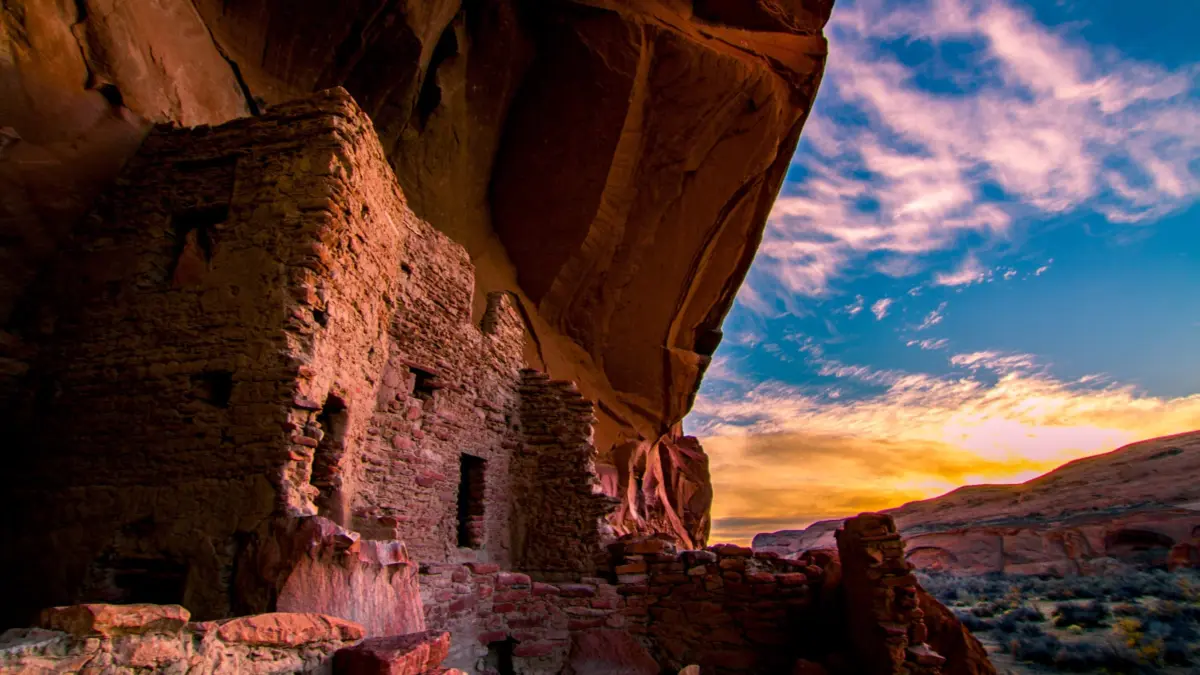
Every hike tells a story, yet there remains a profound, almost transcendent gravity native to trails leading toward ancient human dwellings, granaries, and rock art. These landscapes force contemporary human history into a sobering perspective. Standing before an alcove shaped by wind and time, hikers invariably visualize the people who once inhabited these very canyons—walking identical paths, planting maize in alluvial floodplains, and charting the movements of the cosmos across sandstone walls.
For many outdoor enthusiasts, cultural heritage hikes transform a routine walk in the woods into a profound historical quest. Each spring, specialized backpacking itineraries draw seasoned trekkers deep into the American West to uncover secluded archaeological sites. However, as well-known destinations like Mesa Verde National Park and Chaco Culture National Historical Park experience a surge in mass tourism, the fundamental solitude of these meditative journeys is increasingly disrupted by overcrowded overlooks and heavy foot traffic.
To preserve the contemplative nature of historical exploration, this guide explores off-the-beaten-path hiking trails leading to ancient ruins. These remote backcountry routes invite modern travelers to experience the ancestral American Southwest as it was meant to be encountered: quiet, wild, and deeply storied.
The Imperative of Stewardship: Visiting With Respect
The temptation to touch ancient petroglyphs, trace weathered pictographs, or examine scattered pottery fragments is a natural human impulse upon discovery. Yet, conservation experts stress that physical contact is devastating to these fragile cultural resources. Skin oils accelerate the erosion of ancient pigments, and picking up potsherds or handling structural stones destroys the stratigraphic context vital to archaeologists.
Hikers seeking out these remote structures must assume a mantle of rigorous stewardship. Visitors are urged to strictly adhere to local land-use guidelines, remain firmly on designated trails, and practice rigorous Leave No Trace principles.
Furthermore, heritage land managers emphasize that these sites do not belong to a dead past; they represent a living history. As a park ranger at Bears Ears National Monument noted in interviews with Backpacker, ancestral dwellings and rock art are deeply sacred to contemporary Native American communities whose forebears built and lived within them. Travelers should approach these historical landscapes with the same reverence afforded to cathedrals, temples, and other holy spaces worldwide.
Chronology of the Ancestral Southwest: A Brief Timeline
To fully appreciate the scope of these backcountry hikes, it helps to understand the chronological framework of the cultures that shaped the canyons of the Colorado Plateau:
- Basketmaker Era (c. 1500 BCE – 500 CE): Semi-nomadic hunter-gatherers transition to sedentary agriculture, cultivating corn and squash while developing sophisticated basketry and subterranean pit-house architecture.
- Pueblo I–III Periods (c. 750 – 1300 CE): The Ancestral Puebloan (Anasazi) culture flourishes. Communities move from mesa tops into elaborate masonry cliff dwellings, constructing multi-story architectural marvels and complex stone towers across Utah, Colorado, Arizona, and New Mexico.
- The Great Migration (c. 1250 – 1300 CE): Driven by prolonged drought, environmental degradation, and shifting social dynamics, populations depilate the northern San Juan region, migrating south and east to settle along the Rio Grande and the Hopi mesas.
- Historic and Modern Era (1300 CE – Present): Ute, Navajo, and Apache bands utilize the canyons for seasonal hunting, gathering, and grazing, leaving their own distinct rock art and historical footprints alongside older structures.
Supporting Data: Trail Profiles at a Glance
| Trail Name | Destination / Region | Distance & Type | Permit Required? | Dogs Allowed? |
|---|---|---|---|---|
| Salt Creek Canyon | Canyonlands National Park, UT | 22.5 miles (One-way) | Yes (Recreation.gov) | No |
| House on Fire Ruin | Bears Ears National Monument, UT | 2.1 – 6.4 miles (Out-and-back) | Yes ($6 fee + day pass) | Yes |
| Moon House Ruins | Bears Ears National Monument, UT | 4.5 miles (Out-and-back) | Yes (Limited to 20/day) | No |
| Sand Canyon Loop | Canyons of the Ancients, CO | 11.8-mile Loop | No | Yes |
| Hovenweep Trail | Hovenweep National Monument, UT/CO | 12.4 miles (Out-and-back) | No ($20 entrance fee) | Yes |
| Keet Seel | Navajo National Monument, AZ | 17.2 miles (Out-and-back) | Yes (Guided tour required) | No |
Official Perspectives: Balancing Access and Preservation
Federal land management agencies—including the National Park Service (NPS), the Bureau of Land Management (BLM), and the U.S. Forest Service—face an increasingly difficult management challenge: balancing public access to America’s cultural heritage with the urgent need to protect sites from vandalism, looting, and accelerated foot-traffic erosion.
According to archaeological resource protection officers, social media geotagging has driven exponential visitation increases to fragile backcountry ruins that previously saw only a handful of visitors per season. In response, agencies have implemented stricter permit caps, mandatory reservation windows, and guided-access frameworks for particularly delicate locations.
"When people treat a thousand-year-old granary like an amusement park photo backdrop, structural stabilization becomes an emergency," explains an interpretive ranger stationed in southeastern Utah. "Our mandate isn’t to lock the past away forever, but to ensure that future generations can witness these sites intact. That requires a partnership with the public built entirely on restraint and respect."
Detailed Trail Guide: Deep Into the Secluded Backcountry
1. Salt Creek Canyon Trail, Canyonlands National Park, UT
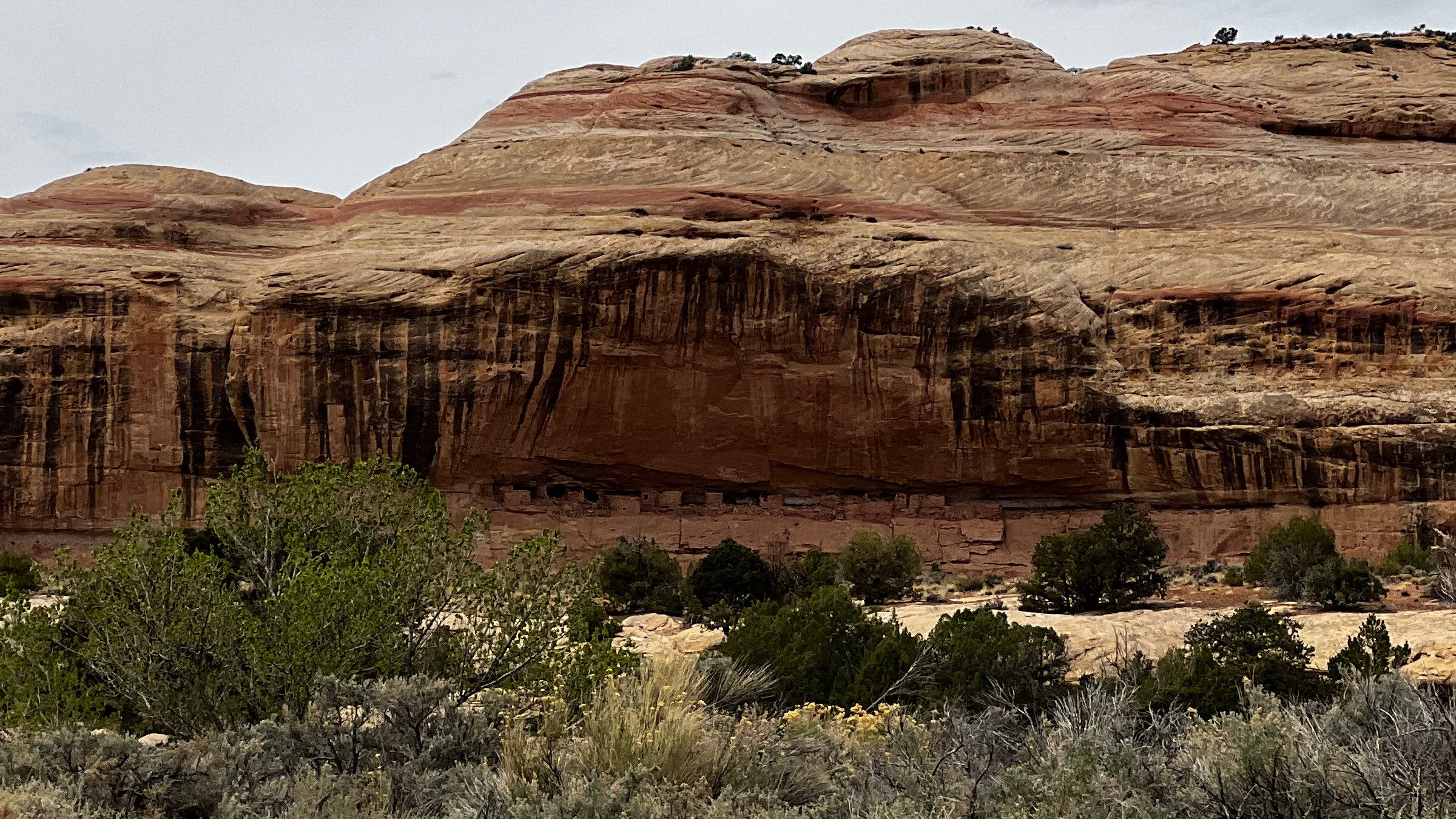
Located in the remote southeastern reaches of Canyonlands National Park, Salt Creek Canyon offers a true wilderness expedition. Hikers can complete a north-to-south thru-hike or undertake an out-and-back journey from either trailhead. The canyon walls are adorned with striking geological formations, natural arches, and well-preserved Ancestral Puebloan stonework.
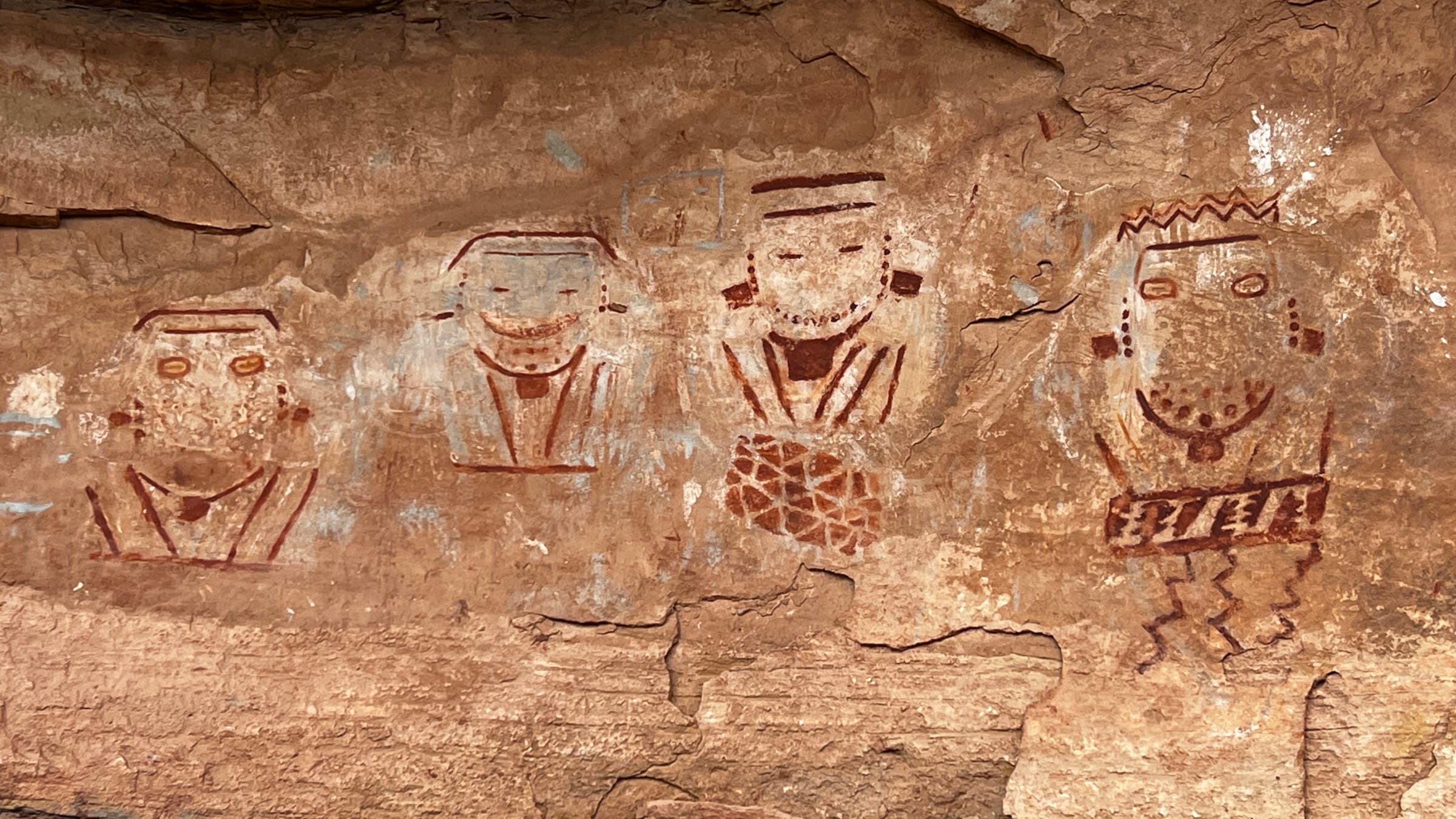
Granaries—once used by indigenous populations to securely store corn and maize—clinging to rock ledges appear with striking frequency. A short spur trail leads to a massive cliff dwelling, while petroglyphs such as the distinctive "America Man" and "Five Faces" panels offer vivid links to the past. Ancient pottery shards frequently litter the surrounding soil, underscoring the need for strict leave-no-trace discipline.
- Pro Tip: Water sources in Salt Creek can be highly unpredictable; early spring is widely considered the optimal window for backpacking. Numerous side canyons reward curious hikers with hidden arches and auxiliary ruin sites.
- Trail Length: 22.5 miles (one-way)
- Permit Required: Yes. Overnight permits for Salt Creek must be secured via Recreation.gov four months in advance. A standard $35 park entrance fee also applies.
- Dogs Allowed: No
2. House on Fire Ruin, Bears Ears National Monument, UT
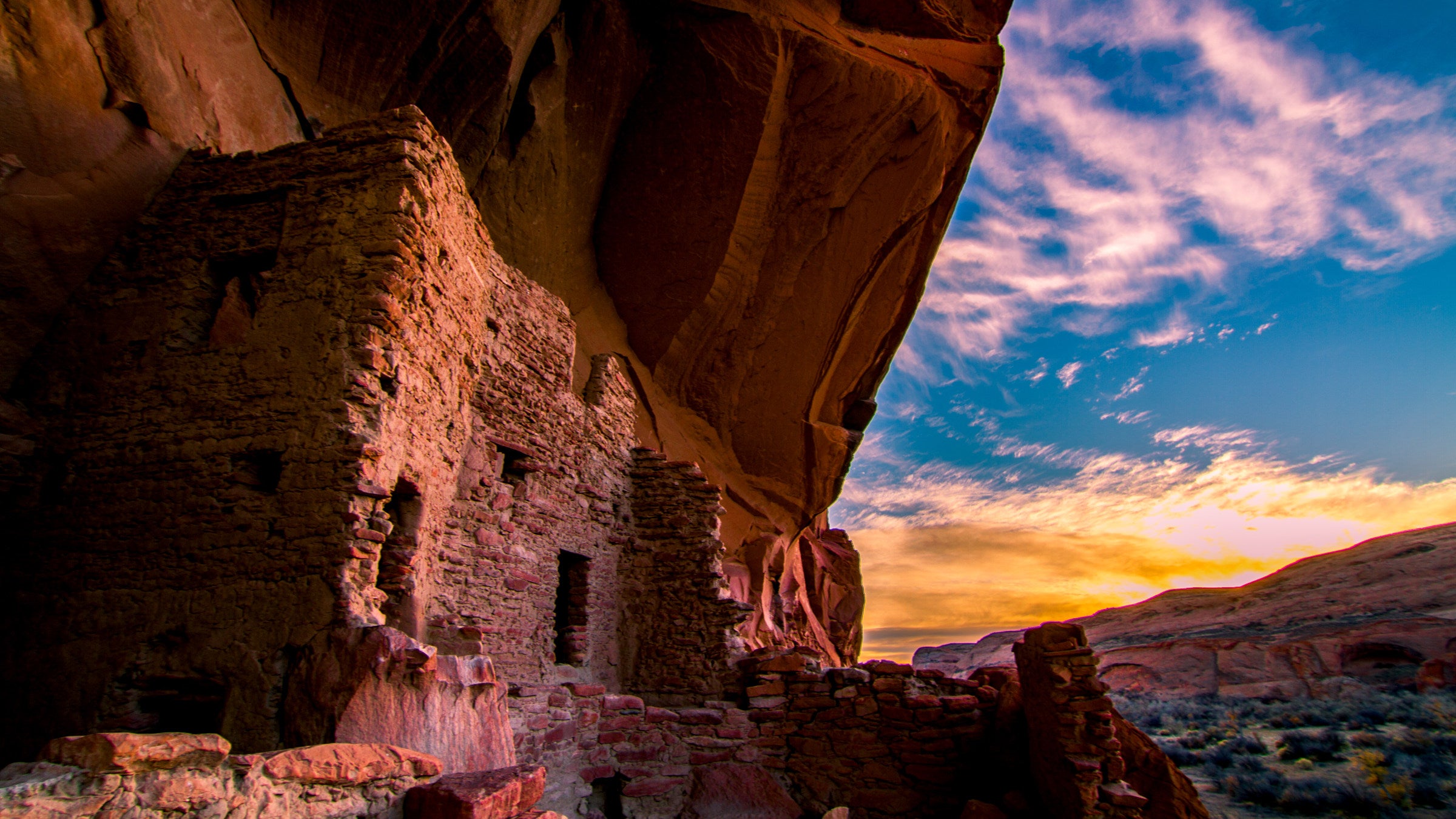
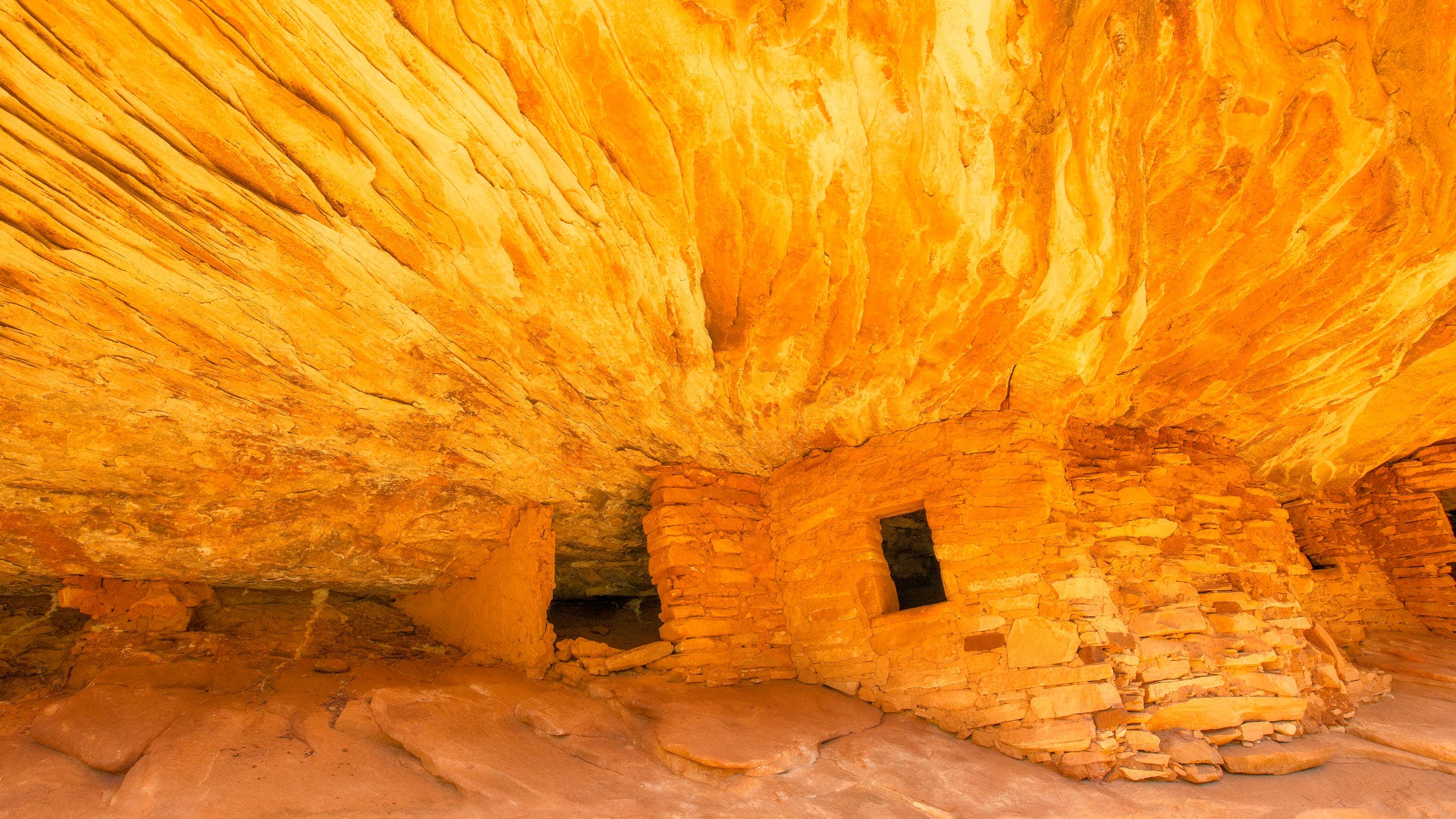
For hikers seeking a shorter trek without sacrificing historical impact, the trail to House on Fire Ruin is an exceptional choice. Spanning just 2.1 miles out-and-back, the route can be extended to 6.4 miles by continuing up the Mule Creek Trail. The ruin itself is built beneath a soaring sandstone alcove; morning light striking the rippled overhead rock formations creates an optical illusion that makes the stone appear to erupt in licking flames.
- Pro Tip: Visitors looking to extend their trip can explore nearby Arch Canyon—a 17.3-mile route featuring robust backcountry camping, flowing water, and additional cultural sites. Trailheads for both locations sit less than five miles apart, allowing hikers to cover both areas under a single permit.
- Trail Length: 2.1 miles out-and-back (or 6.4 miles via Mule Creek)
- Permit Required: Yes ($6 reservation fee, plus a $5 per-person day-hiking fee).
- Dogs Allowed: Yes
3. Moon House Ruins, Bears Ears National Monument, UT
Situated just south of House on Fire, the Moon House Ruins perch dramatically on a precipitous cliff overlooking McCloyd Canyon. The site derives its name from an interior chamber featuring wall paintings that depict the phases of the moon—functioning, essentially, as an ancient Puebloan astronomical calendar.
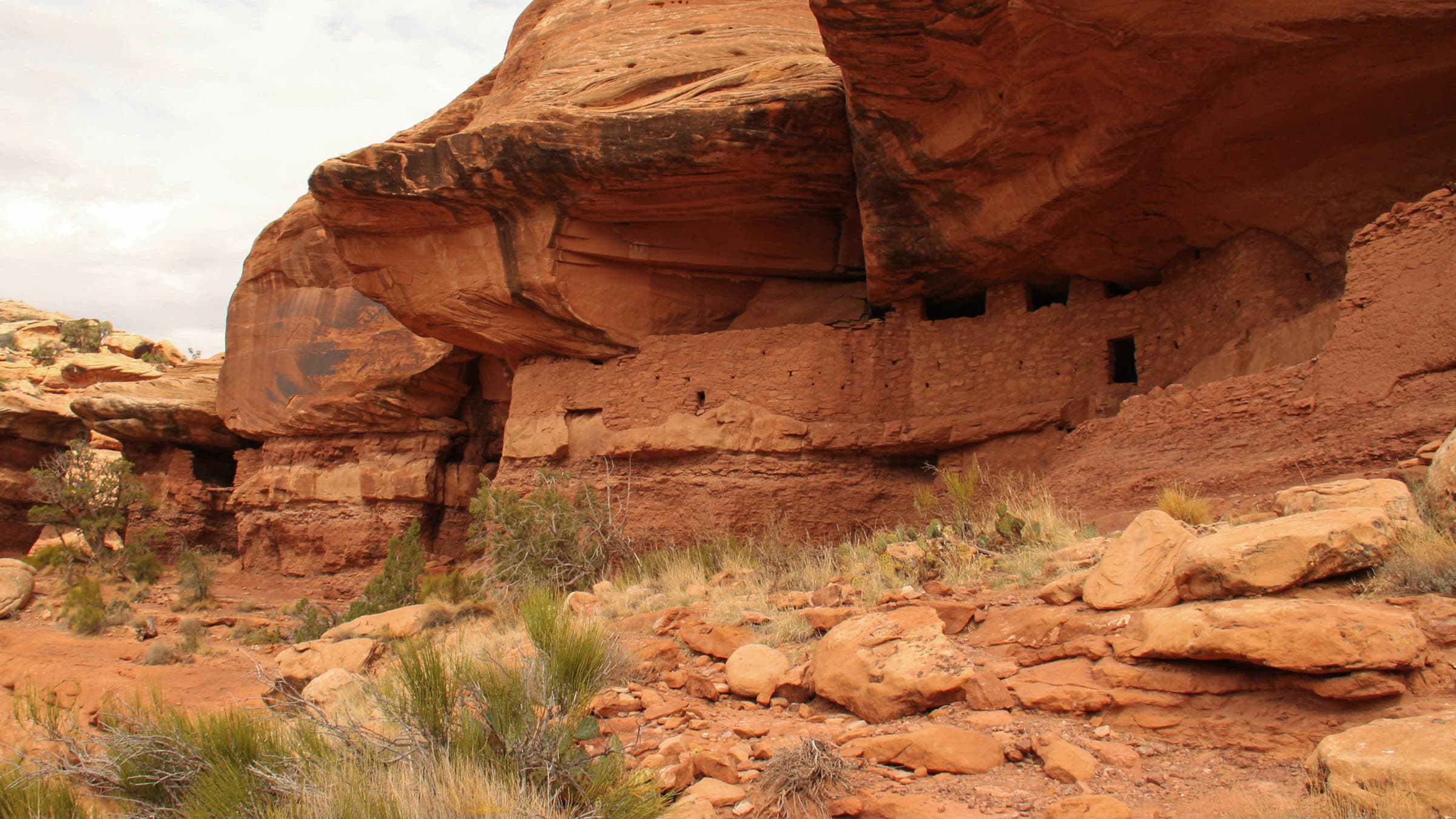
The approach involves a moderately strenuous hike featuring rocky scrambles and fixed rope handlines. Approaching hikers are treated to sweeping telescopic vistas of the masonry structures across the canyon before descending to cross the wash and explore the complex up close.
- Pro Tip: To prevent structural degradation, visitor numbers at Moon House are strictly capped at 20 people per day. Permits must be secured well in advance through the official Recreation.gov portal.
- Trail Length: 4.5 miles out-and-back
- Permit Required: Yes ($6 reservation fee and $5 per-person day-use fee).
- Dogs Allowed: No
4. Sand Canyon Loop, Canyons of the Ancients National Monument, CO
Spanning the high-desert terrain of southwestern Colorado, Canyons of the Ancients National Monument protects one of the densest concentrations of archaeological sites in North America. The Sand Canyon to East Rock Creek Trail loop offers an 11.8-mile circuit weaving past sandstone caves, hidden alcoves, and panoramic views of Marble Mountain and Ute Peak. While many structures remain unmarked and require careful observation to spot, the loop configuration actually features less elevation gain than the direct out-and-back alternative.
- Pro Tip: Dispersed camping is permitted throughout the national monument, but backpackers must utilize previously impacted sites to minimize environmental disruption.
- Trail Length: 11.8-mile loop
- Permit Required: No
- Dogs Allowed: Yes
5. Holly, Horseshoe, and Hackberry Pueblo Trail, Hovenweep National Monument, UT/CO
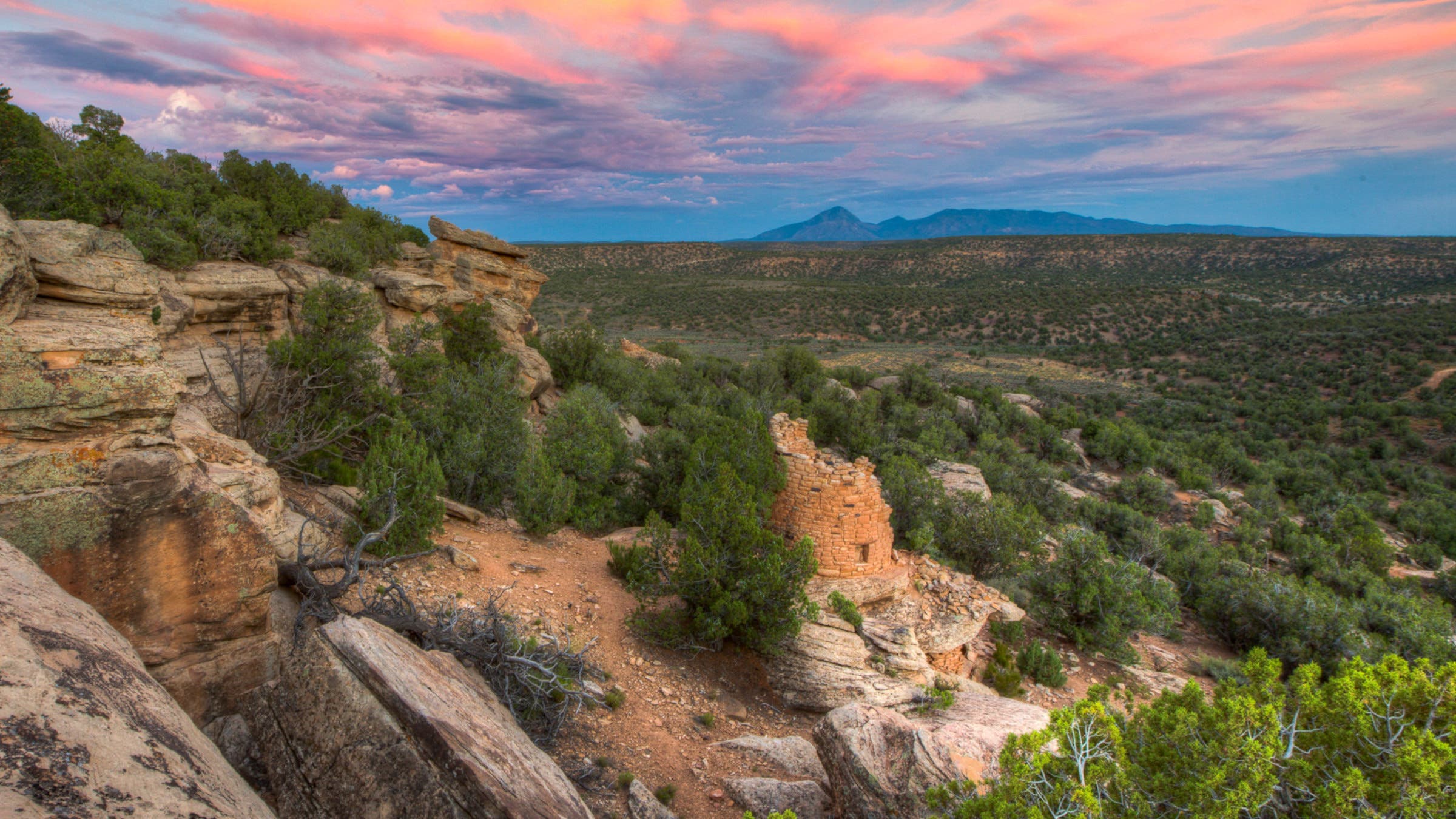
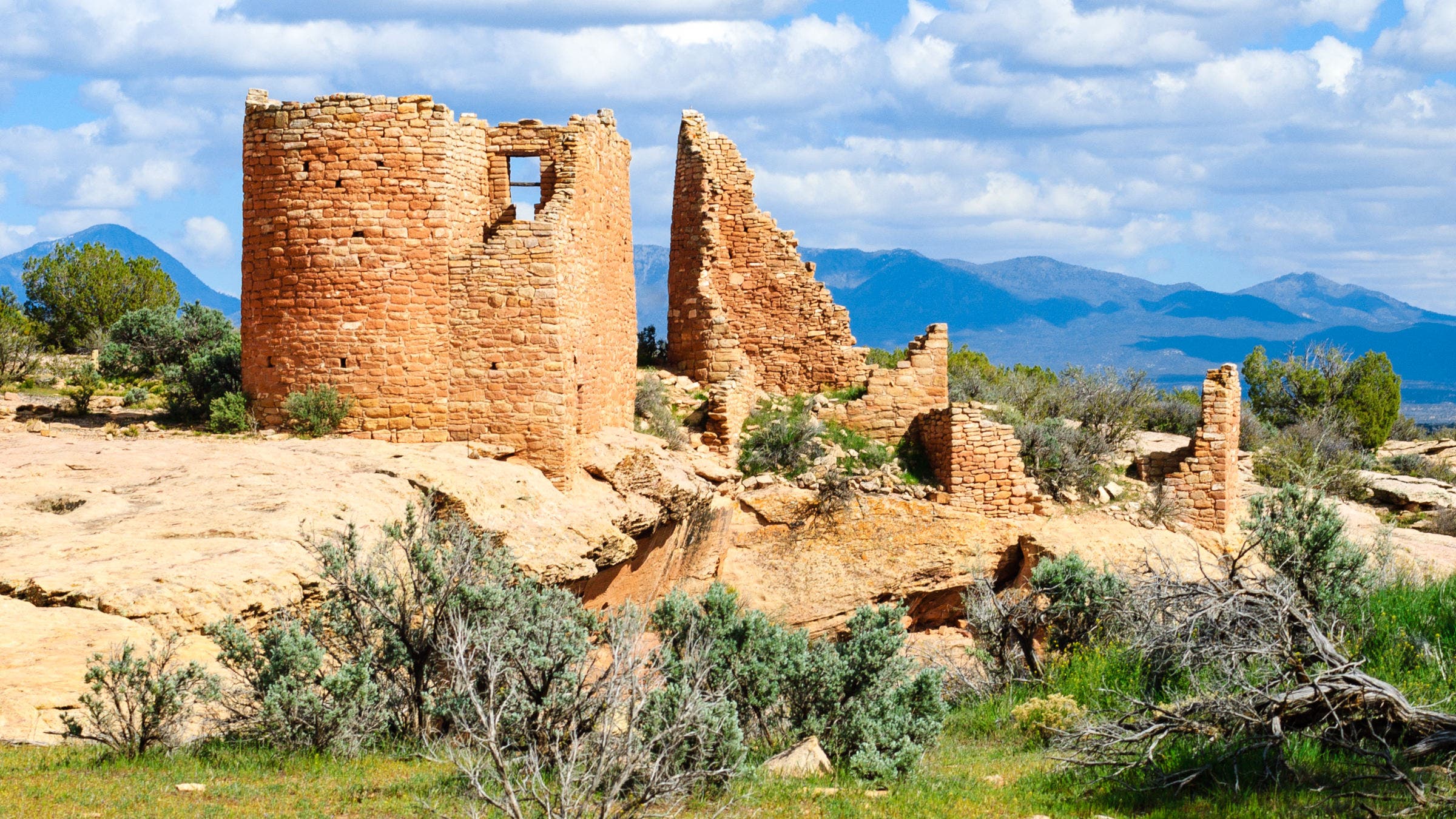
Straddling the Utah-Colorado state line, this 12.4-mile out-and-back trail traverses rolling slickrock country within Hovenweep National Monument. The path rolls through undulating terrain flanked by unique geological features and sweeping monument vistas. Hikers pass remarkable multi-story architectural feats, including the iconic "Twin Towers" and "Hovenweep Castle," while traversing habitat used by rare desert reptile species.
- Pro Tip: Dispersed camping is prohibited within Hovenweep National Monument, but a convenient 31-site campground operates just 0.3 miles past the trailhead. Alternatively, hikers can connect to adjacent BLM lands in Colorado for legal dispersed camping options.
- Trail Length: 12.4 miles out-and-back
- Permit Required: No (Standard $20 monument entrance fee applies).
- Dogs Allowed: Yes
6. Keet Seel, Navajo National Monument, AZ
As the largest Ancestral Puebloan cliff dwelling in Arizona, Keet Seel is an architectural masterpiece. Because of its extreme isolation and fragility, unsupervised visits are strictly prohibited. The National Park Service permits access exclusively via seasonal guided overnight backpacking trips during spring (April–May) and fall (September–October).
At 17.2 miles round-trip, the strenuous trail demands deep canyon descents and arduous climbs in both directions. However, the physical toll is richly rewarded: park guides provide deep historical and cultural context regarding the Puebloan families who inhabited the canyon centuries ago.
- Pro Tip: Advance planning is mandatory. Guided tours book out months in advance and depend entirely on seasonal staff availability; monitor the official NPS Navajo National Monument webpage for application windows.
- Trail Length: 17.2 miles out-and-back
- Permit Required: Yes (Advanced application required via the NPS Navajo Nation portal).
- Dogs Allowed: No
Broader Implications for Outdoor Recreation
As public interest in archaeological tourism expands, land managers face mounting pressure to modernize resource protection without entirely cutting off public access. The integration of digital permit lotteries, educational outreach campaigns, and community-led ranger programs represents the front line of defense for these irreplaceable landscapes.
Ultimately, hiking to ancient ruins is not merely an athletic endeavor; it is an act of cross-cultural witness. By approaching these remote sanctuaries with humility, rigorous preparation, and absolute respect, modern backpackers ensure that the silent voices etched into the canyon walls of the American West will endure for generations to come.
