

By Pawan Bareja
Special to the Journal of Mindful Living
Main Facts: Redefining Resilience Beyond "Powering Through"
In an era defined by compounding global stressors—ranging from socioeconomic division and relentless political polarization to climate grief and personal heartbreak—the concept of resilience is frequently invoked. Yet, society’s traditional understanding of resilience remains fundamentally flawed. Popular culture often frames resilience as an unyielding armor: a hard-edged, heroic capacity to "bounce back," grit one’s teeth, and power through overwhelming difficulties without showing cracks.
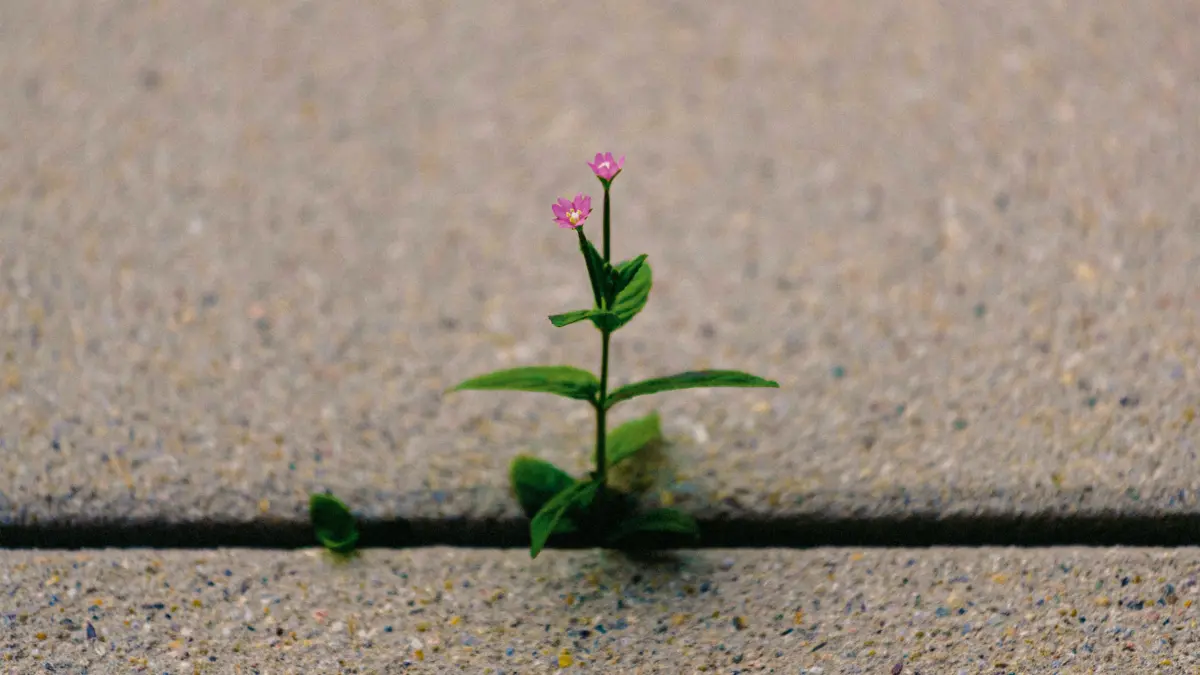
According to trauma specialists and mindfulness educators, true resilience looks entirely different. It does not always manifest as grand displays of strength or stoic steadiness. Often, resilience is remarkably quiet. It is the trembling breath a person manages to stay with while meditating after a grueling, stressful workday. It is the courageous split-second decision not to shut down one’s heart in the middle of a heated argument with a partner, even when every instinct screams to retreat or disappear entirely. And on a macro scale, it is the devastating yet profound willingness to begin again after a home is reduced to ash by wildfires or swept away by floodwaters.
Drawing from over two decades of clinical experience working directly with trauma survivors, experts in the intersection of somatic psychology and contemplative traditions argue that resilience is a deeply human, organic capacity. It is not born from dramatic breakthroughs or sudden psychological transformations. Instead, it grows slowly, almost imperceptibly, in small, ordinary moments—breath by breath, feeling by feeling—through the gradual knitting together of a steadier inner life.
In the Buddhist tradition, this perspective aligns directly with the foundational teachings of the dharma. Rather than fighting against reality, resilience is understood as a soft, lived honesty: the radical ability to sit with one’s direct experience without abandoning oneself. This represents the essence of the First Noble Truth—the truth of suffering, known in Pali as dukkha. In a contemporary landscape where anxiety and personal trauma weigh heavily on millions, resilience evolves beyond a mere personal virtue. It becomes an essential mechanism for staying connected to our shared humanity, rooted in the conscious choice of thought patterns, emotions, and behaviors that foster sustainable well-being.
Chronology: The Evolution of Trauma Recovery and Somatic Healing
To understand how modern psychology and ancient mindfulness traditions have converged on the subject of trauma and resilience, it is helpful to examine the historical trajectory of mental health treatment over the past half-century.
Phase One: The Medicalization and Pathologization of Trauma (Late 20th Century)
For decades, psychological trauma was viewed primarily through a purely clinical and pathologizing lens. Following the Vietnam War and the formal recognition of Post-Traumatic Stress Disorder (PTSD) in the late 1970s, treatment models heavily emphasized symptom reduction, pharmacological intervention, and cognitive restructuring. While these methods saved countless lives, they often treated trauma as an isolated mechanical failure of the brain rather than an embodied, holistic experience that reverberates through the entire nervous system.
Phase Two: The Somatic Revolution (Early 2000s)
At the turn of the twenty-first century, pioneers in somatic psychology began to recognize that psychological healing could not occur exclusively from the "top down" (using the rational mind to control the body). Instead, pioneers emphasized "bottom-up" processing. Clinicians began documenting how trauma physically imprints itself onto the nervous system, causing individuals to habitually brace, freeze, or dissociate. During this period, meditation and mindfulness—long practiced in Eastern lineages—began undergoing rigorous clinical scrutiny, proving their efficacy in regulating autonomic nervous system arousal.
Phase Three: The Integration of Mindfulness and Daily Life (Present Day)
Today, trauma recovery has entered an integrative era. Educators, neuroscientists, and meditation teachers are merging somatic awareness with contemplative traditions to demystify how resilience is actually built. Rather than viewing trauma as an enemy to be vanquished, current frameworks treat deep psychological wounds as powerful energies that can be safely metabolized. Resilience is no longer viewed as an innate, fixed genetic trait that some people possess and others lack. Instead, it is understood as a dynamic, lifelong skill cultivated through deliberate, everyday mindfulness practices.
Supporting Data and Psychological Insights: The "Sleeping Dragon" of Trauma
Clinical observations and contemporary psychological research consistently demonstrate that trauma alters both the physical architecture of the brain and the baseline functioning of the autonomic nervous system. When individuals face overwhelming life events—what teachers categorize as capital-D Dukkha—they frequently become trapped in a churning whirlpool of cyclical, ruminative thoughts.
To help patients comprehend this overwhelming internal state, clinicians often utilize the metaphor of a "sleeping dragon." This is not a monster designed to be slain or violently suppressed, but rather a powerful, misunderstood presence residing within the psyche. When individuals first attempt to sit with the large, intense energies of unprocessed trauma, the experience can initially feel terrifying—akin to the searing fire-breath of a waking dragon.
However, clinical data and patient-reported outcomes indicate that as individuals learn to sit beside this "dragon"—approaching their pain steadily, kindly, and without aversion—the internal dynamic shifts fundamentally. What once paralyzed the nervous system gradually transforms into inner fuel: courage, clarity, and a deeper existential truthfulness.
Furthermore, mindfulness and somatic perspectives suggest that true resilience is built upon three intertwined pillars:
- Awareness: The capacity to notice internal states without immediate reactivity.
- Acceptance: The willingness to allow difficult sensations to exist without self-judgment.
- Agency: The internal freedom to choose a considered, compassionate response rather than an automatic reaction.
When these three qualities operate in tandem, individuals experience a profound somatic groundedness. This groundedness does not deny or bypass suffering; rather, it acknowledges pain fully while ensuring the individual is not internally undone by it.
Official Perspectives and Expert Frameworks
In the words of mindfulness experts and clinical leaders, the path of healing requires a radical reframing of how we treat our wounds. Pawan Bareja, a Spirit Rock-trained meditation teacher and author of Reignite Your Power: Resolving Trauma Through Mindfulness, emphasizes that resilience is fundamentally about transformation rather than restoration.
"Resilience is not merely ‘bouncing back,’" Bareja explains. "None of us ever returns to who we were before heartbreak, loss, or trauma. Those profound experiences forever alter the inner landscape of our tender hearts. True resilience is the quiet capacity to let those changes soften us rather than harden us."
This philosophy challenges the pervasive productivity culture that demands rapid recovery from grief or professional burnout. Clinical psychologists and somatic practitioners echo this sentiment, noting that healing cannot be rushed. Official guidelines from major psychological associations increasingly recommend integrating body-based mindfulness techniques—such as breath awareness and proprioceptive grounding—into standard therapeutic protocols for anxiety and PTSD. By teaching the nervous system that it is safe in the present moment, these modalities bridge the gap between abstract talk therapy and deep, somatic release.
Implications: Practical Mindfulness Practices for Cultivating Resilience
If resilience is a skill rather than a static trait, how can individuals cultivate it amidst the relentless demands of modern life? The answer lies in micro-practices that can be integrated seamlessly into daily routines. Mindfulness serves as the anchor of this process, teaching individuals how to return repeatedly to the body, the breath, and the immediate present.
Somatic Grounding
To steady a dysregulated nervous system, individuals can practice simple somatic grounding exercises:
- Feel the soles of the feet firmly supported by the earth.
- Notice the natural movement of the breath as it expands and contracts the belly or chest.
- Sense the physical weight of the hands resting on the lap.
These simple anchors remind the nervous system that, in this exact, sacred moment, survival is assured, allowing the individual to meet whatever is arising with gentle kindness.
One-Minute Mindfulness
For those overwhelmed by a hectic schedule, formal meditation is not always immediately accessible. "One-Minute Mindfulness" offers an alternative. By dedicating a single, uninterrupted minute to sensory awareness—listening to an ambient sound, noticing a color in the room, or following a single breath without attempting to alter it—individuals weave a soft thread of presence through their day. Practiced regularly, these micro-moments interrupt habitual stress loops.
The NNPC Practice: A Framework for Choice
At the core of trauma-informed resilience is the NNPC Practice, a four-step sequence designed to create a vital space between external triggers and internal reactions:
- N – Notice: Observe whatever physical sensations, emotions, or thoughts are arising in real-time.
- N – Name: Softly label these experiences to acknowledge their presence without judgment (e.g., "There is anxiety," or "There is tightness in the chest").
- P – Pause: Introduce a deliberate moment of spaciousness, interrupting the autopilot of habitual reactivity.
- C – Choose: Select a conscious direction—taking an intentional action that differs from the defensive behavior the emotion is urging, thereby steering toward a wiser, more grounded response.
Conclusion: The Art of Kintsugi and the Future of Healing
Ultimately, building resilience is not a destination to be reached; it is an ongoing, lifelong process of becoming. It is the quiet, transformative realization that while suffering is an inevitable part of the human condition, it does not define the entirety of our identity.
This process mirrors the ancient Japanese art of kintsugi, in which broken pottery pieces are meticulously mended together using lacquer dusted with powdered gold. Rather than attempting to disguise the cracks, kintsugi highlights them, rendering the broken vessel even more resilient, functional, and uniquely beautiful than it was before it was broken.
Similarly, when human beings experience trauma, heartbreak, or systemic stress, they inevitably fracture. Yet, through consistent mindfulness practices and compassionate somatic awareness, individuals gradually taste their own loving awareness. The metaphorical "gold" filling the cracks is not perfection; rather, it is the profound beauty that emerges when we meet our deepest wounds with presence, patience, and unwavering self-compassion.
Mindfulness does not erase the historical scars etched into our hearts and bodies, but it fundamentally transforms our relationship to them. True resilience grows precisely within that newly forged relationship—flourishing whenever we have the courage to stay with ourselves, even when the ground beneath our feet shifts and trembles.
