

By Global Ethics & Spirituality Desk
Published: October 2023
Main Facts
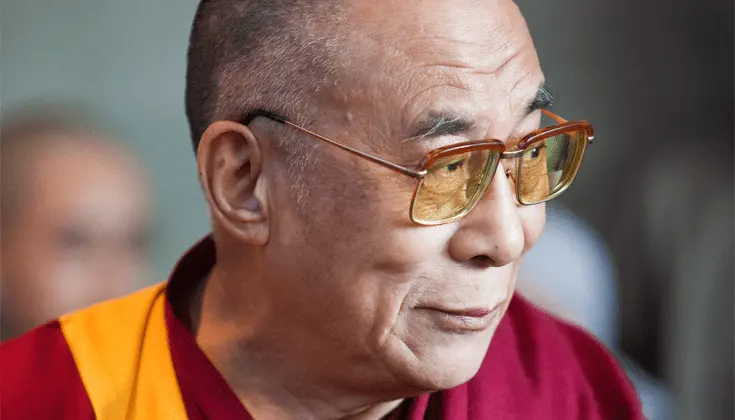
In an era defined by rapid polarization, digital echo chambers, and transactional relationships, the fundamental human quest for connection often gets derailed by self-interest and emotional turbulence. According to teachings by His Holiness the 14th Dalai Lama, Tenzin Gyatso—adapted from his seminal work The Compassionate Life—humanity must radically rethink how it defines, cultivates, and sustains compassion and love.
At its core, the philosophical framework presented by the Dalai Lama separates genuine, unconditioned care from the common, everyday forms of affection that are frequently driven by ego, desire, and emotional attachment. In simple, practical terms, compassion and love are the foundational positive thoughts and feelings that give rise to the most vital pillars of the human experience: hope, courage, determination, and unshakeable inner strength.
Within the Buddhist tradition, compassion and love are not treated as separate, isolated emotions, but rather as two inextricably linked facets of the same overarching psychological and spiritual state:
- Compassion is defined precisely as the active wish for another sentient being to be entirely free from suffering.
- Love is defined as the active desire for another being to experience true, lasting happiness.
However, the Dalai Lama emphasizes that passively admiring these concepts is entirely insufficient. True peace of mind—which serves as the mandatory prerequisite for genuine personal and collective happiness—cannot be achieved merely by believing that compassion is a nice idea. It requires a deliberate, methodical unlearning of self-centeredness and a concerted, daily effort to transform human thoughts and behavior across every sphere of life.
Chronology
To understand the evolution of the Dalai Lama’s teachings on universal responsibility and secular ethics, one must look at both the historical trajectory of his public life and the timeless wisdom of the philosophical lineage he represents:
- Pre-1959 (Traditional Lineage): For centuries, Tibetan Buddhist monastic institutions preserved sophisticated psychological frameworks for training the mind (Lojong). These teachings mapped out how to systematically dismantle ego and replace self-cherishing attitudes with altruism, originally practiced within tightly knit monastic communities and Himalayan societies.
- 1959–Present (Global Exile and Universal Outreach): Following his exile from Tibet, the 14th Dalai Lama began translating these ancient meditative traditions into a universal, secular language accessible to people of all faiths and no faith at all. He shifted the focus of Buddhist philosophy from esoteric ritual to practical psychology and global ethics.
- 1989 (International Recognition): The Dalai Lama was awarded the Nobel Peace Prize, cementing his status not merely as a displaced religious leader, but as a global moral authority advocating for non-violence, universal responsibility, and interfaith dialogue.
- 2001 (Publication of The Compassionate Life): Wisdom Publications released The Compassionate Life, compiling core teachings on how modern individuals can integrate ancient wisdom into contemporary daily stressors, romantic relationships, and societal conflicts.
- Present Day (The Mind & Life Era): Through ongoing collaborations with neuroscientists, psychologists, and educators via the Mind & Life Institute, the Dalai Lama’s theoretical assertions on compassion are actively verified by empirical science, demonstrating measurable neuroplastic changes in individuals who practice secular compassion training.
Supporting Data & Psychological Insights
The core diagnostic insight offered by the Dalai Lama is that human beings frequently mistake emotional attachment for genuine love. Modern psychological and sociological data largely mirror this ancient observation, highlighting how societal structures often reward transactional affection over unconditional regard.
The Anatomy of Attachment vs. Genuine Compassion
| Dimension | Attachment-Based "Love" | Genuine Compassion |
|---|---|---|
| Primary Motivation | Personal emotional need, validation, or fear of loneliness. | The objective well-being and freedom from suffering of the other. |
| Foundation | Unconscious mental projections, idealized expectations, and cognitive biases. | Rational understanding, shared humanity, and deep moral commitment. |
| Stability | Highly volatile; easily dissolves when expectations are unmet or faults are exposed. | Unwavering; remains steadfast even in the face of negative behavior or conflict. |
| Scope | Narrow and exclusive (restricted to family, romantic partners, or close allies). | Universal and inclusive (ultimately extending to all sentient beings). |
The Illusion of Perfection in Relationships
The Dalai Lama points directly to modern romantic dynamics—particularly early-stage marriage and dating—as prime examples where attachment masquerades as love. When two individuals enter a partnership with limited knowledge of each other’s deeper character, their intense desire often functions as a distortion lens.
Under the influence of strong emotional attachment, a partner appears flawless. Minor positive traits are radically exaggerated, while red flags and deep-seated incompatibilities are ignored. When marriages dissolve rapidly, it is rarely due to a sudden absence of love; rather, it is because the relationship was built entirely on emotional attachment fueled by projection and expectation. Once those projections inevitably shift or shatter, the attachment evaporates, leaving resentment in its wake.
The Antidote: Reason-Based Commitment
True compassion, conversely, does not rely on emotional intoxication or idealized projections. It is a firm, reasoned commitment.
Under this framework, a truly compassionate attitude toward another person remains utterly intact—even if that person acts out, behaves negatively, or proves difficult. Genuine compassion is anchored entirely in the objective reality of the other person’s experience: the universal truth that every human being, friend or enemy alike, wishes to experience peace, desires happiness, and desperately wants to overcome suffering. By anchoring compassion in this shared existential baseline, the practitioner transcends personal biases and emotional fluctuations.
Official Responses & Expert Perspectives
The intersection of Buddhist contemplative practices and modern behavioral science has garnered immense support from academic, psychological, and institutional sectors worldwide.
The Scientific Validation of Compassion
Leading neuroscientists working alongside the Dalai Lama at the Mind & Life Institute have published extensive data showing that training the mind in compassion alters brain structures related to empathy, emotional regulation, and stress reduction. Dr. Richard Davidson, a renowned neuroscientist at the University of Wisconsin-Madison, noted in collaborative forums with His Holiness:
"Compassion is not merely a passive moral sentiment or a religious luxury; it is a trainable mental skill. Neuroimaging demonstrates that systematic practice in compassionate thought physically strengthens neural circuits associated with resilience and emotional well-being, effectively insulating individuals against burnout and chronic anxiety."
Sociological and Diplomatic Implications
Global leaders and peace-building organizations have long lauded the Dalai Lama’s advocacy for a "religion of human kindness." In an increasingly polarized geopolitical landscape, institutional responses to his teachings emphasize that sustainable conflict resolution cannot rely solely on political treaties or economic incentives. True diplomatic endurance requires cultivating empathy across ideological divides—treating political adversaries not as permanent enemies, but as human beings trapped in cycles of fear and suffering.
Implications for Modern Society
The implications of transitioning from attachment-based affection to genuine, unconditioned compassion are profound, touching upon personal wellness, interpersonal relationships, and global socio-political structures.
1. Transforming Personal Mental Health
In an age marked by an epidemic of loneliness, anxiety, and burnout, the Dalai Lama’s diagnosis offers a stark counter-narrative. Much of modern psychological distress stems from hyper-fixation on the self—what contemplative traditions term "self-centeredness." When every interaction is unconsciously filtered through the lens of “What will I get out of this?” or “How does this affect my ego?”, the mind remains in a state of chronic defense and agitation.
By actively shifting the internal focus toward the welfare of others, individuals experience a profound psychological release. Cultivating the wish for others to be free from suffering automatically dampens the internal noise of self-obsession, unlocking natural reservoirs of inner strength, courage, and hope.
2. Redefining Modern Relationships
In interpersonal spheres—whether in friendships, marriages, or professional partnerships—recognizing the difference between attachment and compassion allows for healthier, more resilient bonds. Relationships built on genuine compassion rather than mutual dependency and projection are better equipped to weather inevitable conflicts, human flaws, and shifting circumstances. Recognizing that someone has faults does not extinguish genuine love; rather, true compassion embraces human imperfection with patience and steadfast care.
3. A Blueprint for Global Coexistence
On a macro level, the ultimate goal articulated by the Dalai Lama—to develop genuine, universal compassion for every living being throughout the universe—serves as the ultimate antidote to systemic violence, tribalism, and environmental destruction. When public policy, education, and international diplomacy are informed by a universal ethics of human kindness rather than tribal self-preservation, humanity moves closer to a sustainable, peaceful global community.
Conclusion
As the world navigates complex crises, the teachings of the 14th Dalai Lama remind us that compassion is neither a passive emotion nor a naive ideal. It is a rigorous, rational, and transformative discipline. Moving past the fragile boundaries of emotional attachment into the expansive territory of genuine, unconditioned care offers a clear, actionable pathway toward personal peace and global survival.
