Published September 9, 2026 By mbg Senior Commerce Editor
Main Facts: Redefining At-Home Fertility Tracking
For decades, the standard toolkit for at-home cycle tracking has relied on fragmented, often frustrating methods. Traditional ovulation predictor kits (OPKs) ask users to interpret faint lines or guess whether an escalating color change constitutes a positive result. Calendar applications map cycles based on rigid population averages rather than biological reality, and basal body temperature (BBT) charting only confirms ovulation after it has already occurred. Crucially, none of these methods can answer the fundamental question on many people’s minds: Did my body actually ovulate this month, or did it merely attempt to?
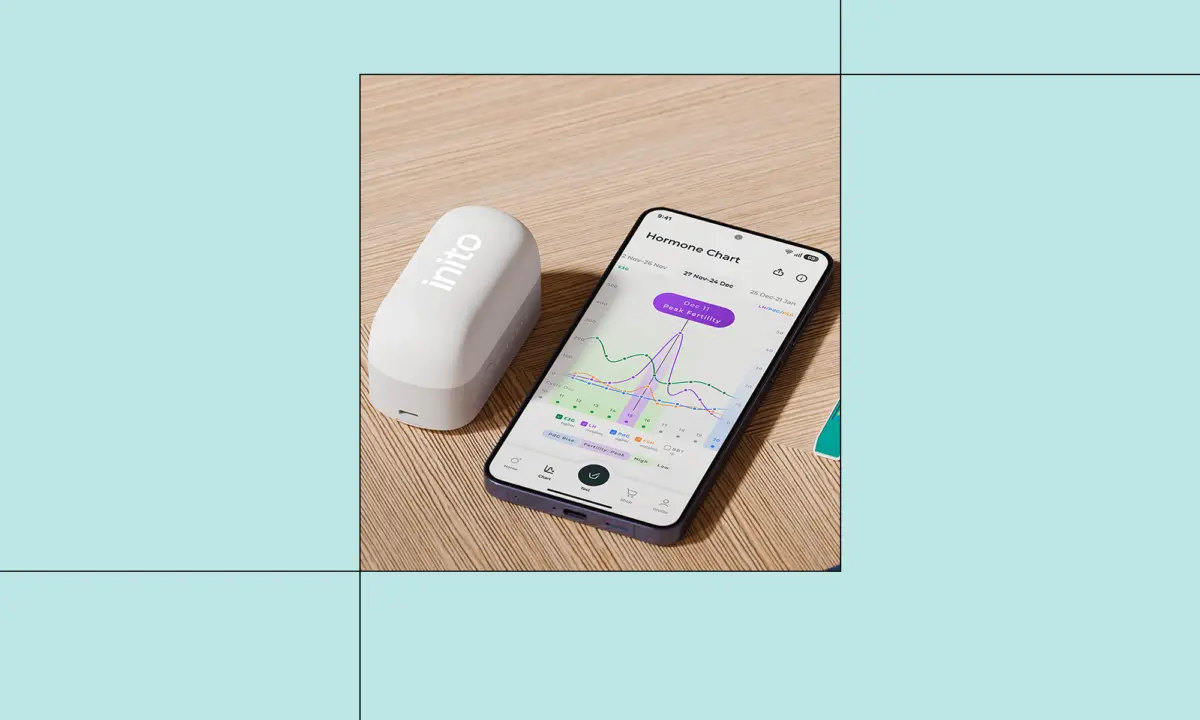
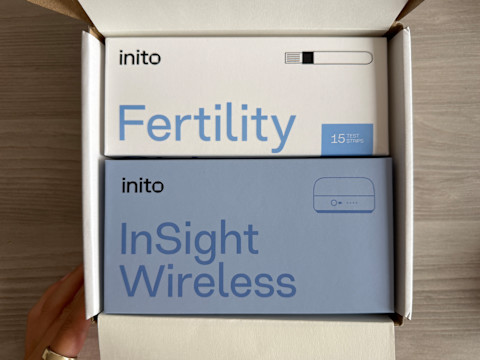
Enter the Inito Fertility Monitor, an all-in-one at-home testing system designed to bridge the gap between rudimentary drugstore strips and expensive clinical laboratory workups. Rather than measuring a single biomarker, Inito tracks four key reproductive hormones simultaneously:
Estrogen (E3G): To map the opening of the fertile window.
Luteinizing Hormone (LH): To detect the primary surge preceding ovulation.
Follicle-Stimulating Hormone (FSH): To support follicular development tracking.
Pregnanediol Glucuronide (PdG): A urine metabolite of progesterone used to confirm that ovulation has successfully taken place.
By utilizing advanced "Spectral Mapping" technology, Inito delivers lab-grade hormone values in roughly 10 minutes from home. Rather than relying on population thresholds, the system builds an individualized baseline tailored specifically to the user’s personal hormonal rhythms, making it uniquely suited for individuals with irregular cycles, polycystic ovary syndrome (PCOS/PMOS), or those navigating reproductive transitions later in life.
Chronology: Putting the Inito System to the Test
To evaluate how the device functions in real-world scenarios, this review incorporates firsthand testing alongside insights from leading obstetrician-gynecologists (OB/GYNs) and reproductive endocrinologists.
Getting Started and Daily Testing
The onboarding process is designed to be streamlined. After unboxing the device, setting up the companion mobile application and syncing the monitor via Wi-Fi takes less than five minutes.
Per Inito’s protocol, testing begins on cycle day 6 (with the first day of menstruation designated as day 1). The morning routine is straightforward:
Collect first-morning urine in the provided collection cup up to the marked line.
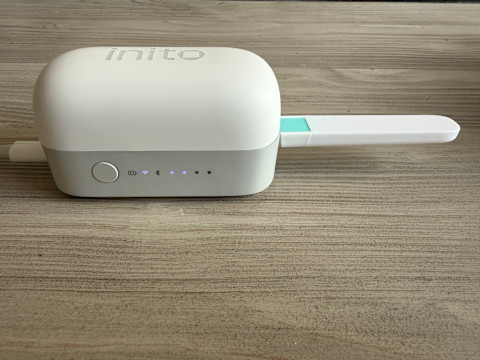
Unwrap a fresh test strip, dip it into the urine for 15 seconds, and secure the cap.
Insert the strip into the Inito monitor device, which connects to the smartphone app.
A 10-minute countdown timer begins automatically, allowing the user to close the app and continue their morning routine while the device performs its analysis.
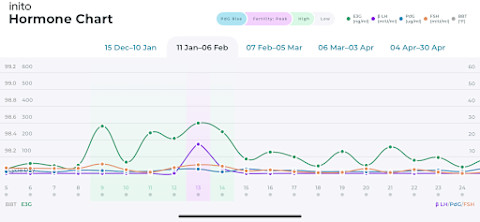
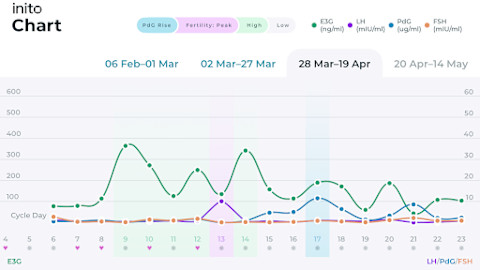
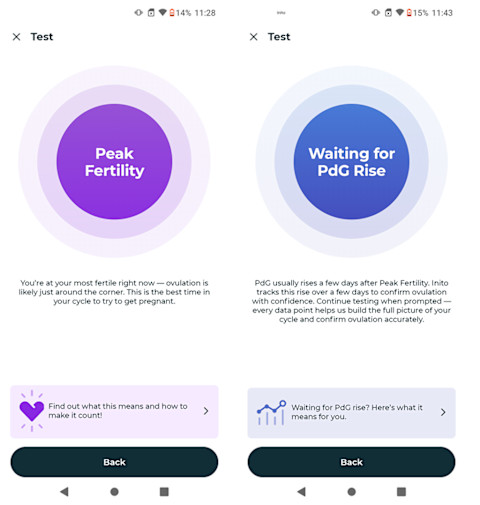
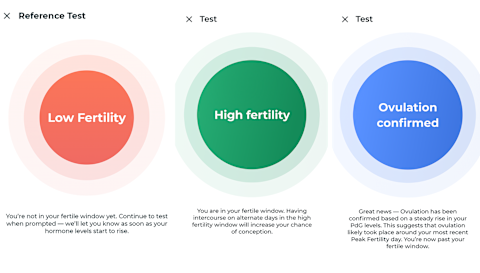
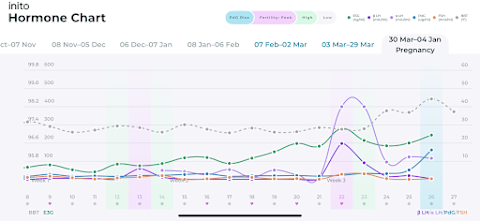
Once processed, the app delivers a daily status notification categorized as Low Fertility, High Fertility, Peak Fertility, or Ovulation Confirmed. All four hormone values populate into an interactive, daily-updating trend chart, allowing users to log physical symptoms and map them directly against their hormonal fluctuations.
Supporting Data: The Science and Accuracy Behind Spectral Mapping
At-home fertility monitors live or die by their technical precision. Inito’s proprietary Spectral Mapping technology moves far beyond standard colorimetric line-darkness evaluations. While a traditional reader captures a simple image to judge shade, Inito uses both visual colorimetric imaging and fluorescence signals. This captures a signal dataset roughly 100 times richer than standard readers, enabling the system to neutralize environmental variables such as bathroom humidity, lighting differences, and dust.
Clinical Validation
The technology is backed by peer-reviewed data:
Serum Correlation: A published study evaluating hormone patterns across various cycle phases found that Inito’s urinary hormone levels correlated at 95% with corresponding blood serum hormone trends.
Ovulation Confirmation: Research published in Nature’s Scientific Reports demonstrated that Inito confirms ovulation with over 92.2% accuracy.
Precision Testing: Head-to-head laboratory evaluations indicate that Inito delivers industry-leading system-level precision among over-the-counter fertility monitors measuring numeric hormone values.
Official Responses: What Medical Experts Say
To understand the clinical utility of multi-hormone home monitors, leading reproductive endocrinologists and OB/GYNs were interviewed regarding their perspectives on patient-collected data.
The Danger of Isolated Numbers
Experts universally emphasize that a single hormone data point holds little clinical value without context.
"I rarely focus on one hormone or one isolated number. I’m looking for the overall pattern across the cycle," says Lora Shahine, M.D., a double board-certified OB/GYN and reproductive endocrinologist. "Fertility is rarely determined by a single data point—it’s the overall hormonal sequence that provides the most useful information."
Dr. Shahine notes that standard OPKs only measure LH, yet only about 42% of women experience the sharp, textbook single-surge that standard threshold tests are built to detect. Furthermore, an LH surge is only predictive; it does not guarantee that ovulation has occurred. By measuring PdG alongside LH, Inito bridges this gap.
Empowering Clinical Consultations
Physicians consistently report that patients who bring structured, multi-hormone charts to appointments experience significantly more productive clinical visits.
"The patients who come in with hormone data have fundamentally different appointments than those who come in with just a positive OPK and a date," explains Sasha Hakman, M.D., a double board-certified OB/GYN and reproductive endocrinologist. "They know their cycle. They can tell me when something felt off. That kind of informed patient leads to faster, more precise clinical decisions and better outcomes."
Susan Nasab, M.D., a reproductive endocrinologist, highlights the utility for complex cases:
"Having this detailed hormonal history allows us as REI physicians to make more informed decisions and personalize treatment more effectively, particularly in cases of PCOS, ovulatory dysfunction, premature ovarian insufficiency, and early perimenopause."
Implications: Real-World User Experiences and Clinical Utility
Real-world accounts from Inito users mirror the observations of clinical specialists, demonstrating how multi-hormone monitoring can uncover hidden cycle anomalies.
The Unnoticed Secondary Surge: User Bailey Blackburn discovered she experienced two distinct LH spikes during a single cycle—the second of which occurred late in the month and successfully resulted in conception, an event a standard calendar app would have missed entirely.
Navigating Secondary Infertility: After four unsuccessful cycles, user Brooke Gresock used Inito to identify an absence of a post-ovulation PdG rise. Sharing these graphs with her gynecologist enabled targeted medical intervention and a subsequent successful pregnancy on the following medicated cycle.
Managing PCOS and Irregular Cycles: Beth Donati, who manages PCOS and Hashimoto’s disease with cycles fluctuating between 60 and 90 days, successfully used Inito’s baseline-adapted tracking to accurately predict ovulation windows when standard methods failed.
Final Verdict: Is Inito Worth It?
The Inito Fertility Monitor represents a significant step forward from traditional, single-marker ovulation strips. Supported by a 95% correlation with blood serum trends and over 92.2% ovulation confirmation accuracy, it provides actionable, personalized data rather than generalized population averages.
Who Is It Best For?
Individuals with irregular cycles or PCOS/PMOS who struggle with standard threshold tests.
Those approaching or navigating reproductive planning later in life (age 35+).
People seeking concrete, shareable data to streamline initial consultations with fertility specialists.
Who Should Pass?
Individuals currently using hormonal birth control (which suppresses natural cycles).
Patients undergoing active clinical interventions like IVF stimulation, where real-time ultrasounds and lab blood draws dictate protocols.
Anyone for whom daily metric tracking induces psychological distress rather than clarity; as Dr. Shahine advises, the ultimate goal must always be clarity over stress.
For those tired of guessing games, blank calendar predictions, and ambiguous line-reading, Inito offers an evidence-based, highly precise window into the complex machinery of the human endocrine system.