

Executive Summary: Main Facts of the Initiative
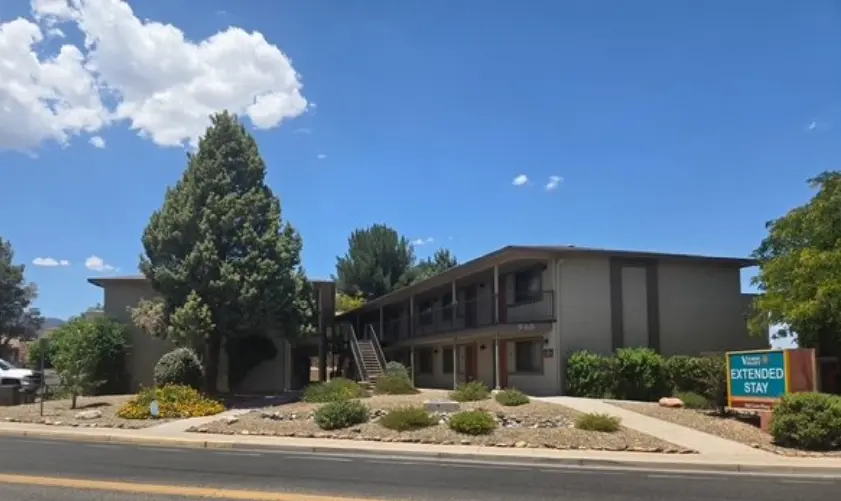
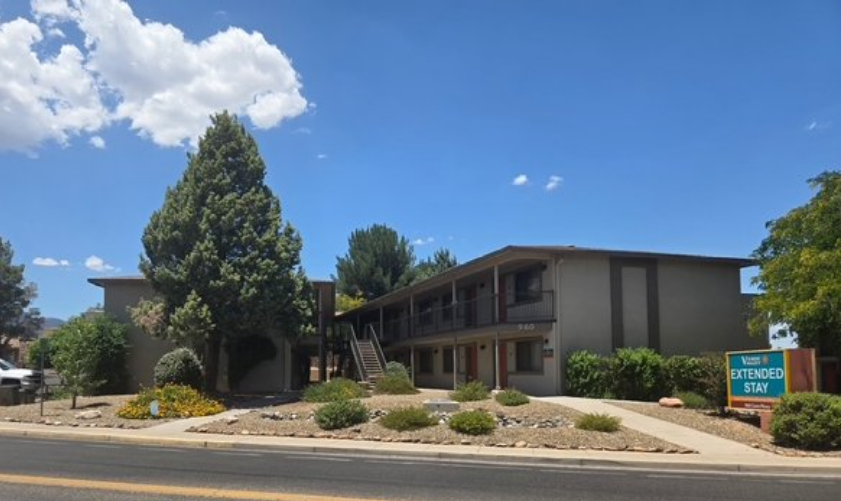
In a decisive move to combat the escalating housing crisis in the Verde Valley, the Cottonwood City Council has greenlit an ambitious municipal-nonprofit partnership to convert an underutilized extended-stay lodging facility into permanent workforce housing. During its August 4 meeting, the City Council voted 5-0 to approve a preliminary agreement with the Flagstaff-based nonprofit Housing Solutions of Northern Arizona (HSNA). The initiative will transform the Verde Valley Extended Stay hotel, located at 960 Cove Parkway, into a 34-unit residential community named the Cottonwood Cove Apartments. Councilmen Chris Dowell and Bob Marks were absent from the vote.
The project addresses a critical shortage of housing for the "missing middle"—moderate-income workers who earn too much to qualify for traditional low-income federal housing subsidies but are increasingly priced out of Cottonwood’s rapidly appreciating private real estate market. To ensure the development serves its intended purpose, the agreement establishes strict, long-term regulatory guardrails:
- Income Caps: Tenant eligibility is restricted to households earning between 80% and 100% of the Area Median Income (AMI). Specifically, 17 units are reserved for households at or below 80% AMI, 10 units for those at 90% AMI, and seven units for those at 100% AMI.
- Rental Rates: Rents for the 80% AMI tier are projected at $1,200 per month, inclusive of approximately $150 in utility costs, bringing the base rent to an effective $1,050 per month.
- Deed Restrictions: The property must remain dedicated to workforce housing for a minimum of 30 years.
- Rental Protections: The contract explicitly bans any conversion of the units into short-term or vacation rentals.
- Municipal Preference: In a bid to address municipal recruitment struggles, the agreement grants a leasing preference to City of Cottonwood employees.
While HSNA has secured the vast majority of the capital required for the acquisition and rehabilitation, the total development costs exceed the nonprofit’s immediate cash reserves. To close this deficit, the City of Cottonwood has agreed in principle to a gap-financing framework. This arrangement will function as a municipal loan featuring concessionary interest rates, a low downpayment, and a deferred repayment schedule. The precise terms of this financing package are scheduled for final review and approval in September.
Chronology of the Project and Housing Assessment
The development of the Cottonwood Cove Apartments is the result of a multi-year effort to understand and mitigate the region’s shifting housing dynamics. The timeline below outlines the key milestones in this process:
- 2021: Baseline Housing Study Commissioned
The City of Cottonwood partners with real estate and economic consulting firm Elliott D. Pollack & Company to conduct a comprehensive housing needs assessment, establishing a baseline of affordability gaps and rental shortages. - September 2024: Recognition of Affordable Housing Success
HSNA’s previous local venture, the Oak Wash Apartments—a deeply affordable housing project offering rents at $375 per month—receives the prestigious Rural Housing Development of the Year Award from the Arizona Department of Housing, proving the viability of the city-nonprofit partnership model. - Mid-2025: Updated Housing Study Completed
Elliott D. Pollack & Company delivers an updated housing assessment to the city, analyzing data from 2019 through 2025. The study reveals a severe tightening of the rental market and an accelerating influx of out-of-area retirees. - August 4, 2025: City Council Approves Preliminary Agreement
The Cottonwood City Council votes 5-0 to approve the initial agreement with HSNA for the Verde Valley Extended Stay conversion and establishes the policy framework for gap financing and tenant income limits. - August 17, 2025: Planning & Zoning Review
The project is presented to the Cottonwood Planning & Zoning Commission for conditional use permits and site plan reviews necessary to transition the commercial lodging property into multi-family residential zoning. - September 1, 2025: Final Council Authorization
The project returns to the City Council for a final vote to authorize the acquisition, approve the zoning changes, and officially launch the construction phase. - Mid-September 2025: Gap Financing Finalization
Municipal staff and HSNA representatives return to the City Council to present the finalized, legally binding terms of the low-interest, deferred-repayment gap financing loan.
Supporting Data: The Changing Economics of Cottonwood
The policy decisions driving the Cottonwood Cove project are backed by sobering economic data compiled by Elliott D. Pollack & Company. The consulting firm’s 2025 update exposed a widening divergence between local wage growth and housing costs, alongside a profound demographic shift.
The Divergent Income Landscape
A core challenge facing Cottonwood is that local incomes are not keeping pace with the broader county or the state. The Area Median Income (AMI) within the city limits of Cottonwood stands at $48,448 annually. In contrast, the overall median income for Yavapai County is significantly higher at $87,300.
Furthermore, over a five-year period, Yavapai County experienced a robust 32.7% increase in median income, while Cottonwood’s median income grew by a modest 14.0%. Because federal and state housing guidelines often use county-wide figures to calculate AMI, Cottonwood residents are at a severe disadvantage when competing for housing priced against county-level wealth.
Income & Housing Cost Growth Comparison (5-Year Trends)
===========================================================
Yavapai County Income Growth:   [███████████████] 32.7%
Cottonwood Income Growth:       [██████] 14.0%
Cottonwood Rent Increase:       [███████████] 24.0%
Single-Family Home Prices:      [███████████████████████] 50.0%
Condo & Townhome Prices:        [██████████████████████████████] 66.0%
===========================================================
Exploding Real Estate and Rental Markets
Between 2019 and 2025, the cost of living in Cottonwood escalated rapidly across all housing sectors:
- Apartment Rents: Rose by 24%, culminating in an average market rent of $1,309 per month by 2025.
- Single-Family Homes: Median purchase prices surged by 50%.
- Condos and Townhomes: Experienced the sharpest escalation, with median prices rising by 66%.
- Rental Vacancy Rate: Settled at an extremely tight 4.5%, indicating a severe inventory shortage where landlords hold substantial pricing power.
- Homeownership Gap: The homeownership rate in Cottonwood sits at just 53.6%, vastly trailing the Yavapai County average of 75.1%.
The Burden on Households
The standard economic metric for housing health dictates that a household should spend no more than 30% of its gross income on housing and utility costs. Households exceeding this threshold are classified as "rent-burdened," while those spending over 50% are "severely rent-burdened." Cottonwood’s data highlights a systemic crisis:
- 30.1% of households (1,065 families) are rent-burdened, spending more than 30% of their income on shelter.
- 17.3% of households (610 families) are severely rent-burdened, spending more than half of their gross income on housing.
Official Responses and Perspectives
The transition from hotel rooms to workforce housing has drawn widespread commentary from city officials, housing developers, and market analysts.
Ryan Bigelow, Cottonwood’s Director of Strategic Initiatives, emphasized the strategic municipal benefit of the project, particularly the employee preference clause. "It’ll help us as a recruitment tool," Bigelow stated. "If we have some folks who can’t get here because they can’t find a place to live, we get to hop in the front of the line."
Bigelow also addressed the city’s creative approach to funding the project through municipal gap financing. "We are not agreeing to exactly how we’re going to do gap financing, but we will do a concessionary interest rate, low downpayment, and a deferred repayment schedule to help with that part. We will find out the details and come back to the council in September."
Devonna McLaughlin, CEO of Housing Solutions of Northern Arizona, clarified the distinct market segment this project targets. "The proposed rent for those folks up to 80% AMI would be $1,200 a month," McLaughlin explained. "That includes utilities. So, if you factor about $150 a month in utilities, that’s about $1,050 a month in rent."
McLaughlin contrasted the workforce-centric Cottonwood Cove project with HSNA’s previous award-winning local development. "At Oak Wash, we’re charging $375 a month. That is a different population, very much lower income." She noted that Cottonwood Cove, consisting of three distinct properties along Cove Parkway, represents HSNA’s fourth hotel-to-apartment conversion, a specialized development model the nonprofit has refined to lower construction costs and accelerate delivery times.
Rick Merritt, President and co-founder of Elliott D. Pollack & Company, provided broader market context, pointing out that Cottonwood has become a victim of its own geographic appeal and affordability relative to neighboring markets. "What we’re finding is that, probably, you’ve been discovered as a place to retire," Merritt observed. "There’s a lot of retirees coming here. Your housing costs are less than on the other side of the mountain in Prescott and Prescott Valley."
Merritt explained that this retirement influx, coupled with lower local wages, creates a structural market failure. "Affordable housing is typically used to describe housing for low- and moderate-income households earning less than 60% of the AMI—about $51,000 or so county-wide. Because of the difficulty in reaching low- and moderate-income households, it usually comes from state and federal programs like public housing, Section 8 vouchers, and low-income housing tax credit projects."
However, those who earn too much for subsidies still find themselves priced out of the open market. "What you typically have is a shortage of units at the bottom end of the market and a shortage of high-end housing," Merritt said. "But everybody’s trying to find housing in the middle. The people with higher incomes are able to pay less than 30% of their income on housing. The people with the lower incomes are paying more."
Strategic Implications for Cottonwood’s Future
The conversion of the Verde Valley Extended Stay into the Cottonwood Cove Apartments carries profound implications for the long-term economic, demographic, and structural future of Cottonwood.
Mitigating the Municipal and Private Recruitment Crisis
By prioritizing city employees for tenancy, Cottonwood is directly addressing a public sector staffing crisis. When municipal workers—such as police officers, water utility technicians, and administrative staff—cannot afford to live within city limits, municipal service delivery suffers. This workforce housing model provides a safety valve, allowing the city to offer subsidized, stable housing as part of its employment benefits. This approach is expected to serve as a blueprint for local private employers, such as the regional healthcare sector and school districts, which face similar recruitment challenges.
Demographic Imbalance and Economic Vitality
The rapid aging of Cottonwood’s population—with the median age climbing from 46 to 55 in just five years—poses a threat to the local economy. An aging population increases demand for healthcare and social services while simultaneously shrinking the active local labor force.
Without targeted workforce housing initiatives like Cottonwood Cove, younger working-class families will continue to migrate to more affordable regions. This migration would leave local businesses, restaurants, and tourism-related enterprises without a viable labor pool. Securing moderate-income housing is essential to maintaining a balanced, multi-generational community.
Cottonwood Demographic & Housing Profile
===========================================================
Median Age (Five-Year Shift):      46 Years ➔ 55 Years
Homeownership Rate:                53.6% (County: 75.1%)
Rent-Burdened Households (>30%):   30.1% (1,065 households)
Severely Rent-Burdened (>50%):     17.3% (610 households)
===========================================================
Innovative Land Use: The Hotel Conversion Model
The adaptive reuse of commercial lodging into multi-family residential units represents a highly efficient approach to urban planning. Traditional ground-up residential developments are often slow, expensive, and subject to intense NIMBY ("Not In My Backyard") neighborhood opposition.
In contrast, hotel conversions utilize existing building envelopes, hook up to existing municipal utility lines, and require significantly less raw material. This approach bypasses many supply chain delays and drastically reduces the carbon footprint of the development. By successfully executing its fourth hotel conversion, HSNA is demonstrating a scalable, cost-effective tool for rural and mid-sized Western municipalities grappling with sudden population growth.
The 30-Year Stabilizing Effect
The 30-year deed restriction on Cottonwood Cove ensures that these 34 units will remain insulated from market speculation for three decades. This long-term stability protects a portion of the city’s housing stock from being purchased by institutional investors or converted into lucrative short-term vacation rentals, which have disrupted housing markets across northern Arizona. As Cottonwood continues to grow, this project will remain a dedicated asset for the local workforce, preserving the community’s economic diversity and resilience.
