

By Global Wellness & Sustainability Desk
Published: October 2023
Main Facts: The Hidden Cost of the Crystal Healing Boom
Over the past decade, the global crystal and gemstone market has experienced an unprecedented renaissance. Driven by a surging cultural interest in holistic wellness, mindfulness, and alternative spirituality, millions of consumers now turn to crystals like quartz, amethyst, and citrine to manifest positivity, balance energy, and ground their daily lives. However, this booming wellness economy—estimated to be worth billions of dollars globally—rests upon a foundation that is rarely discussed in boutique storefronts or on curated social media feeds: the extraction pipeline.
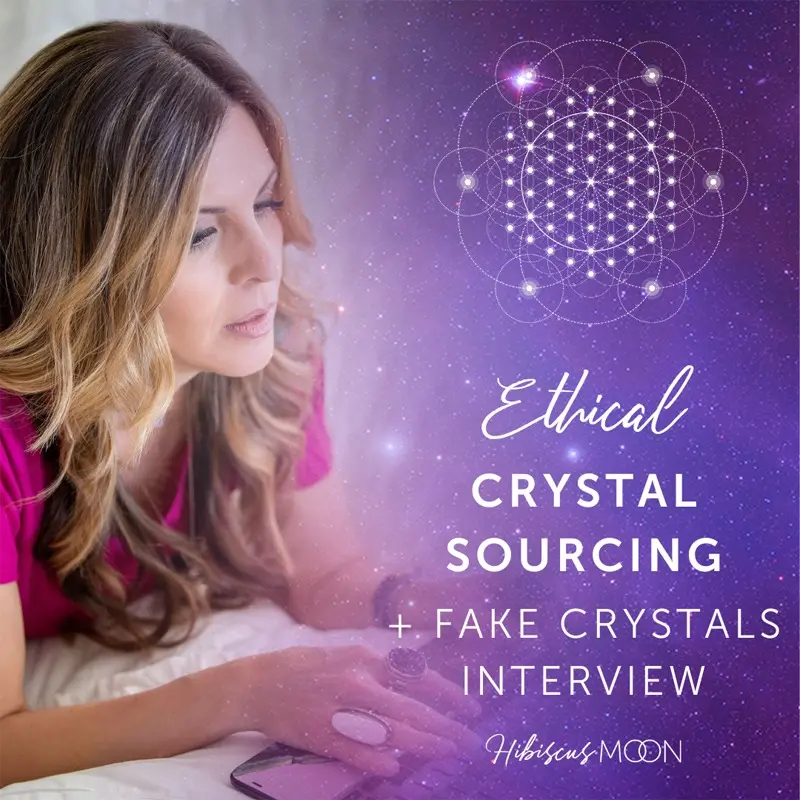
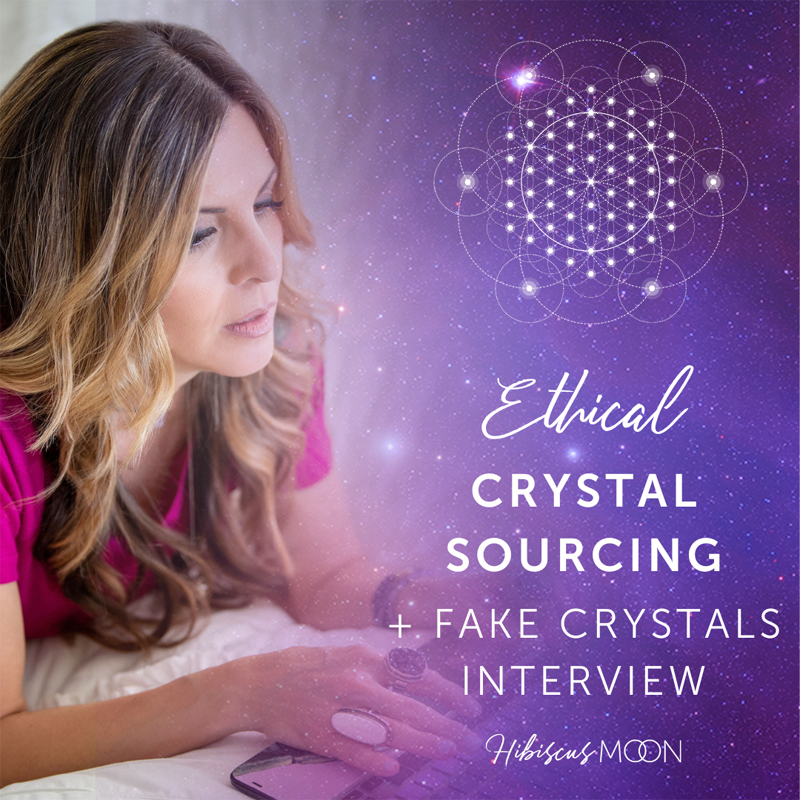
In a recent, highly anticipated live broadcast, holistic educator and author Hibiscus Moon sat down with prominent crystal advocate Barbie, widely known in digital spaces as "Cold Brew Barbie," to tackle what many in the spiritual community consider an inconvenient truth. The core issue centers on ethical crystal sourcing—a complex, multifaceted debate encompassing environmental degradation, unsafe labor conditions, human rights violations, and the stark disconnect between the serene energy of a polished crystal on a nightstand and the harsh reality of how it was pulled from the earth.
Unlike diamonds or precious metals, which face rigorous regulatory scrutiny regarding conflict sourcing (such as the Kimberley Process), the semi-precious gemstone and mineral market operates largely within a regulatory gray area. The vast majority of crystals sold worldwide are mined in developing nations—including Madagascar, Brazil, India, China, and the Democratic Republic of Congo—often by artisanal and small-scale miners (ASM) working without formal protections, fair wages, or environmental oversight.
The discussion between Hibiscus Moon and Cold Brew Barbie sheds light on an urgent question facing modern spiritual practitioners: Can a crystal truly carry positive, healing energy if its lifecycle involves exploitation, environmental destruction, and human suffering?
Chronology: From Ancient Traditions to the Modern Wellness Industrial Complex
To understand how the crystal market reached its current critical juncture, it is essential to trace the historical trajectory of mineral gathering and its evolution into a mass-market consumer phenomenon.
Phase 1: Traditional and Indigenous Gathering (Pre-20th Century)
Historically, crystals and minerals were gathered by indigenous and local populations in small quantities. These practices were typically integrated into local craftsmanship, trade economies, or spiritual traditions. Extraction was manual, localized, and restricted by the physical limitations of human labor and basic hand tools, resulting in a minimal ecological footprint.
Phase 2: The New Age Movement and Niche Markets (1970s–1990s)
The modern commercial crystal market began to take shape during the New Age movements of the late 20th century. During this era, crystals were primarily sold in specialized metaphysical shops, occult bookstores, and esoteric markets. Demand was steady but niche, and supply chains were short, often relying on independent importers who maintained direct relationships with small-scale quarries and family-run operations.
Phase 3: The Digital Explosion and Social Media Boom (2010s–Present)
The landscape shifted dramatically with the advent of visual-centric social media platforms like Instagram and TikTok. Aesthetics centered around cozy aesthetics, meditation spaces, and "crystal grids" turned minerals into lifestyle commodities. The COVID-19 pandemic further accelerated this trend as millions sought solace in home-based wellness practices.
As demand skyrocketed, traditional supply chains could no longer keep pace. This led to the industrialization of crystal mining in developing regions. Mega-exporters stepped in, streamlining logistics to supply wholesale markets in the West. Consequently, the intimate connection between the miner and the end consumer was severed, obscuring the true origins of the stones. Recognizing the growing ethical crisis, thought leaders like Hibiscus Moon and Cold Brew Barbie began utilizing live-streaming platforms to bridge this information gap, fostering difficult conversations about supply chain transparency.
Supporting Data: The Anatomy of the Global Gem Supply Chain
Analyzing the supply chain reveals why ethical sourcing remains an elusive goal in the crystal industry. A single crystal typically passes through multiple hands before reaching a retail shelf, with each layer compounding the opacity of its origin.
[Artisanal Miner]
       ↓ (Local Middleman / Broker)
[Regional Wholesaler / Processor]
       ↓ (International Exporter)
[Global Distributor / Trade Show]
       ↓ (Western Retailer / Online Shop)
[End Consumer]
Key Economic and Labor Metrics:
- Informal Labor Dominance: According to estimates from international labor organizations, upwards of 80% of the world’s colored gemstones and crystals are sourced through artisanal and small-scale mining (ASM). Of this workforce, a significant percentage operates in the informal economy without legal registrations, safety gear, or labor rights.
- The Margin Discrepancy: A raw mineral specimen mined in regions like rural Madagascar or the mountains of Minas Gerais, Brazil, may be purchased from a miner for pennies. By the time that same mineral is cut, polished, branded, and sold in a high-end wellness boutique in New York or London, its price can appreciate by several thousand percent. Very little of this financial windfall trickles back to the local mining communities.
- Environmental Toll: Unlike large-scale industrial mining which faces environmental impact assessments, artisanal mining often involves unregulated clearing of land, chemical runoff (such as mercury and lead used in mineral processing), and soil erosion, leaving behind scarred landscapes and contaminated local water supplies.
Despite these sobering statistics, the data also shows a positive shift. Consumer demand for traceability is on the rise. A growing segment of buyers is actively seeking out vendors who can verify fair-trade practices, direct-from-mine relationships, and safe working conditions.
Official Responses and Industry Perspectives
As awareness surrounding unethical extraction practices grows, various stakeholders within the metaphysical, mining, and retail sectors have responded with strategies, challenges, and proposed solutions.
The Educator and Activist Perspective
During their live broadcast, Hibiscus Moon and Cold Brew Barbie emphasized that awareness is the first step toward reform. They argued that avoiding the topic out of fear of "spoiling the magic" of crystals is counterproductive to the very principles of mindfulness and healing that the community espouses.
"We have to shine a light on this," Hibiscus Moon noted during the session. "Even though you might think it’s an inconvenient truth, it’s always good to be educated. We cannot practice true holistic wellness while turning a blind eye to the suffering embedded in our supply chains."
Wholesalers and Mine-Direct Retailers
Some progressive crystal businesses have begun implementing "mine-to-market" tracking. These vendors establish direct partnerships with specific mining families or cooperatives, ensuring that fair wages are paid, child labor is strictly prohibited, and safe working conditions are maintained. However, these businesses note that scaling such models is exceedingly difficult due to the decentralized nature of mineral deposits and the presence of corrupt intermediaries in developing regions.
Traditional Gemological and Regulatory Bodies
Mainstream gemological institutions, traditionally focused on precious stones like diamonds, rubies, and emeralds, have historically paid little attention to quartz, amethyst, and other high-volume metaphysical minerals. Consequently, there is currently no internationally recognized certification standard for "ethical crystals" akin to Fairtrade Gold or Forest Stewardship Council (FSC) timber certification. This regulatory vacuum leaves the burden of proof entirely on individual retailers and conscientious consumers.
Implications: The Future of Conscious Consumerism in Spirituality
The ongoing conversation sparked by industry voices like Hibiscus Moon and Cold Brew Barbie carries profound implications for the future of the wellness industry.
1. The Redefinition of "Energy" and Intention
For decades, the crystal community has placed immense emphasis on cleansing and charging stones to rid them of negative energy accumulated during transport. However, a philosophical shift is underway. Practitioners are beginning to ask: Can a ritual cleansing truly neutralize the energetic imprint of child labor, worker exploitation, or environmental devastation? This realization is prompting many to reconsider how they acquire new stones, placing a higher value on second-hand crystals, vintage pieces, or minerals sourced from transparent, ethical vendors.
2. The Push for Standardization and Certification
As consumer pressure mounts, the lack of a unified regulatory standard is becoming untenable. The next logical evolution for the crystal market will likely involve the creation of independent auditing bodies and certification labels. Retailers who fail to provide provenance data may find themselves losing market share to transparent, ethically driven competitors.
3. Empowerment of Local Mining Communities
True ethical sourcing goes beyond simply avoiding harm; it involves active contribution. By supporting cooperatives that invest a portion of their profits back into local infrastructure, education, and healthcare in mining regions, consumers can transform crystal purchasing from an extractive exercise into a sustainable economic partnership.
Conclusion
The vibrant dialogue between Hibiscus Moon and Cold Brew Barbie serves as a crucial wake-up call for the global wellness community. Crystals are magnificent gifts of the earth, holding geological wonders shaped over millions of years. Enjoying their beauty and perceived energetic properties does not have to come at the expense of human dignity and ecological health.
By demanding transparency, educating ourselves on supply chains, and supporting ethical vendors, the spiritual community can align its purchasing habits with its core values of harmony, compassion, and respect for all living things. The truth may be inconvenient, but as the modern wellness movement matures, facing it is the only path forward.
